The Authoritative Guide
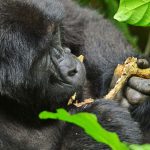
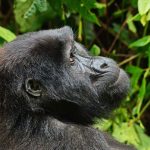
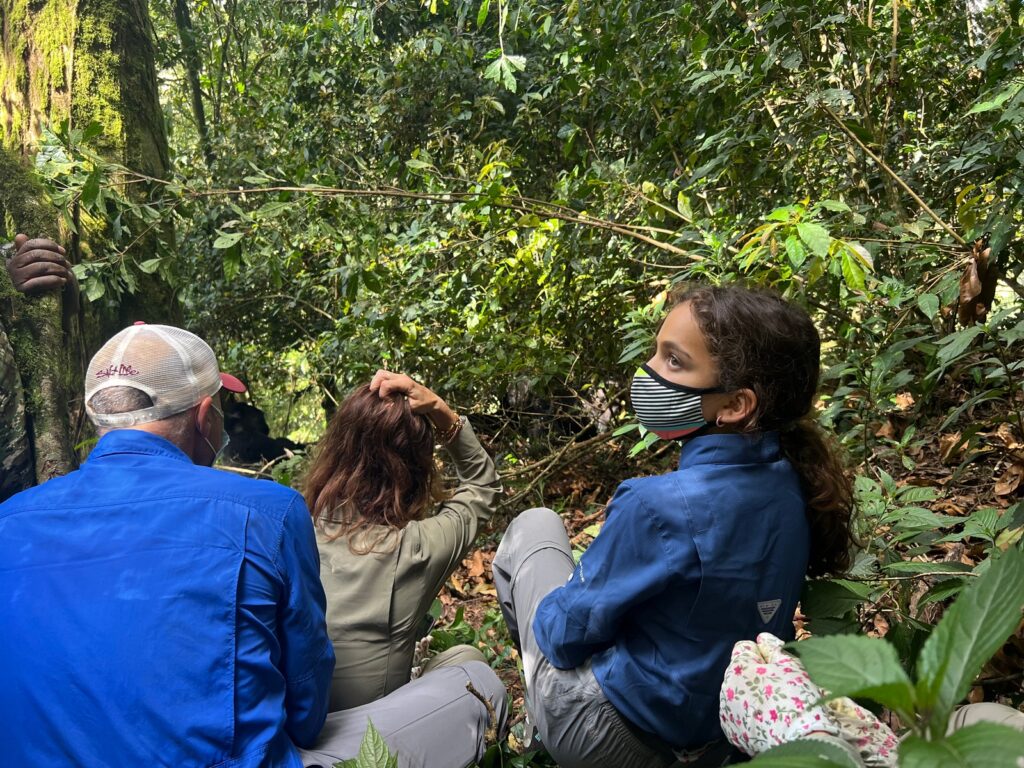
In the landscape of high-stakes wildlife exploration, Seeing Gorillas is the ultimate benchmark. As we navigate, the global demand for primate encounters has reached a technical peak. However, mountain gorillas cannot survive in captivity; to see them, you must deploy to a specific, high-altitude volcanic enclave in East and Central Africa.
At Primate World Safaris, we treat Where to See Gorillas not as a destination choice, but as a Technical Mission Profile. Depending on your physical bandwidth, your 8K photography requirements, and your conservation investment strategy, the best location shifts. Here is the standard of truth on where to find the world’s last wild gorillas.
-
The Geographic Enclaves: Understanding the Species
Before choosing a park, you must understand that Gorilla is not a monolith. In, we categorize sightings by subspecies and terrain.
| Subspecies | Primary Locations | Population Status | Experience Profile |
| Mountain Gorilla | Uganda, Rwanda, DRC | ~1,063 (Increasing) | High-altitude, misty, habituated. |
| Eastern Lowland | DR Congo (Kahuzi-Biega) | ~6,800 (Decreasing) | Large-bodied, bamboo forests. |
| Western Lowland | Rep. of Congo (Odzala) | ~300,000 (Widely Dispersed) | Swampy basin, dense canopy. |
-
Bwindi Impenetrable National Park (Uganda)
The Global Powerhouse
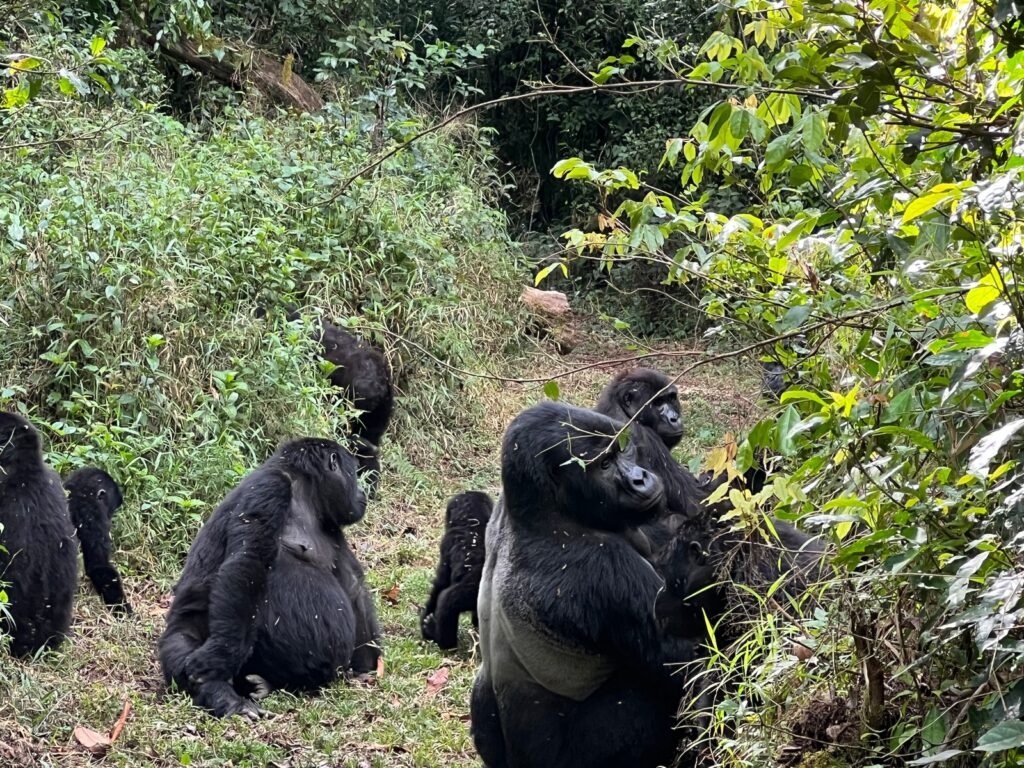
Bwindi is a UNESCO World Heritage site and is currently home to nearly half of the world’s mountain gorilla population.
- The Mission Impact: Bwindi offers the highest diversity of habituated families (over 25 groups). This ensures a 98% success rate for sightings.
- The Arbitrage: At $800 per permit (dropping to $600 during the April/May/November Low Season), Bwindi is the strategic choice for travelers looking to maximize their field time.
- The Habituation Factor: Bwindi remains the only place in the world offering the Gorilla Habituation Experience. This allows for a 4-hour encounter with a semi-habituated family—a must for wildlife cinematographers.
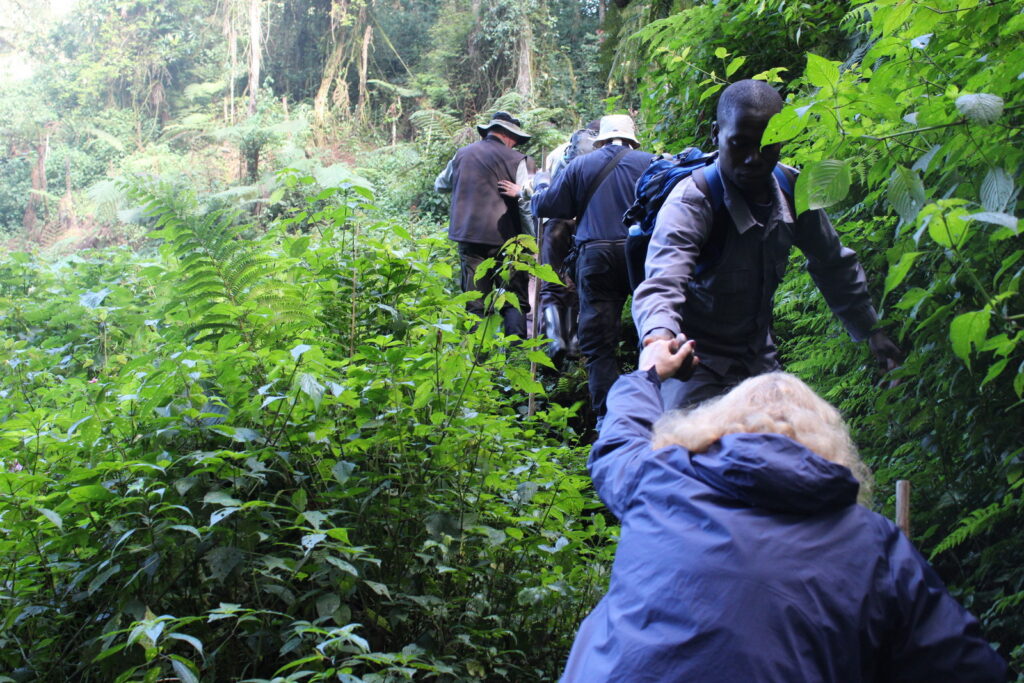
- Terrain Complexity: High. Bwindi is Impenetrable for a reason. Expect steep, 45-degree inclines and thick undergrowth.
-
Volcanoes National Park (Rwanda)
The Elite Access Hub
Rwanda has positioned itself as the Private Jet of gorilla trekking. It is the most accessible park, located just 2.5 hours from Kigali International Airport.
- The Mission Impact: The tracking here takes place on the slopes of the Virunga Volcanoes. The terrain is often a more open bamboo forest compared to Uganda’s dense jungle, providing cleaner lines of sight for photography.
- The Investment: Permits are $1,500. Rwanda is the choice for the Time-Poor/Capital-Rich traveler. You can land in the afternoon and be trekking the next morning.
- Sustainability Standard: Rwanda’s Low Volume, High Value model is world-class, ensuring that your $1,500 funds some of the most advanced primate research on the planet at the Ellen DeGeneres Campus of the Dian Fossey Gorilla Fund.
-
Mgahinga Gorilla National Park (Uganda)
The Quiet-Luxury Alternative
Mgahinga is where Gold meets Silver. It is the smallest park in Uganda, but it offers a unique, uncrowded atmosphere.
- The Mission Impact: Home to the Nyakagezi Family, a group known for its migratory history but now permanently settled in Uganda.
- The Golden Hook: Mgahinga is the only place where you can see Mountain Gorillas and Golden Monkeys in the same ecosystem.
- Logistics: Most Primate World Safaris missions use the Kisoro Airstrip for direct deployment into this sector, avoiding the long drives from the capital.
-
The Democratic Republic of Congo (DRC)
The Raw Frontier
For the pioneer, the DRC offers the most raw, high-intensity encounters, though it requires the most rigorous logistical oversight.
- Virunga National Park: The classic mountain gorilla location. It is Africa’s oldest national park and offers a dramatic backdrop of active volcanoes (Nyiragongo).
- Kahuzi-Biega National Park: The only place to see the Eastern Lowland Gorilla (Grauer’s Gorilla). These are significantly larger than mountain gorillas and offer a totally different behavioral profile.
- Security Note: We prioritize Bio-Security and Physical Security. Always check the latest UWA/RDB and regional advisories before deploying to the DRC sectors.
-
Odzala-Kokoua National Park (Republic of Congo)
The Lowland Secret
Distinct from the DRC, the Republic of Congo is the headquarters for seeing Western Lowland Gorillas.
- The Experience: This is swamp trekking. You often track gorillas through bais (forest clearings) while wading through knee-deep water. It is a high-bandwidth adventure for those who have already completed the Mountain circuit.
- Habituation Status: Odzala has successfully habituated several families, making it the premier spot for seeing this subspecies in the wild.
-
Tactical Logistics: When to Deploy
The climate is your primary logistical constraint.
| Season | Months | Visibility | Trekking Difficulty |
| Peak Dry | June – Sept | High | Low (Firm ground) |
| Short Rains | Oct – Nov | Moderate | Moderate (Muddy) |
| Short Dry | Dec – Feb | High | Low (Stable) |
| Long Rains | March – May | Low (Mist) | Technical (High slip risk) |
The Pro Tip: If you are a high-fidelity photographer, the Short Rains in October provide the best atmospheric mist in the forest, creating that iconic Gorillas in the Mist aesthetic.
-
Frequently Asked Questions (FAQ)
Can I see gorillas in South Africa or Kenya?
Negative. Mountain gorillas only exist in the transboundary region of Uganda, Rwanda, and the DRC. There are no wild gorillas in Kenya, Tanzania, or South Africa.
Which country is better?
It depends on your Standard of Truth.
- Choose Rwanda for luxury, ease, and short travel times.
- Choose Uganda for value, longer encounters (Habituation), and a deeper wild feel.
- Choose Congo for lowland subspecies and raw, off-the-grid adventure.
Is the age limit strictly enforced?
Yes. The minimum age is 15 years old. This is a biometric and behavioral requirement; children may lack the immunity or the discipline required to stand 10 meters from a Silverback.
Conclusion: Securing Your Slot
Whether you choose the lush, biodiversity-rich Bwindi or the accessible slopes of the Volcanoes, where to See Gorillas is a decision that impacts both your experience and the survival of the species.
As of March, permit availability for the July–August window is already at 85% capacity. If you are planning a mission for the coming year, the time to lock in your sector-specific logistics is now.
Would you like Primate World Safaris to run a real-time availability check on the UWA and RDB portals for your preferred dates?