
The 2026 Great Migration Map: Where to See the River Crossings in July and August

Where to See the River Crossings in July and August

In the world of wildlife photography and high-stakes adventure, there is no event more sought after than the Mara River crossings among the great migration map. By July and August 2026, the “Mega-Herds”, composed of over 1.5 million wildebeest and 300,000 zebras, reach the northern frontier of the Serengeti-Mara ecosystem.

For the traveler, this is the season of adrenaline. At Primate World Safaris, we treat the migration not as a single event, but as a strategic game of positioning. To see a river crossing is to witness the rawest form of nature: a chaotic, dust-filled plunge into crocodile-infested waters where instinct is the only guide.
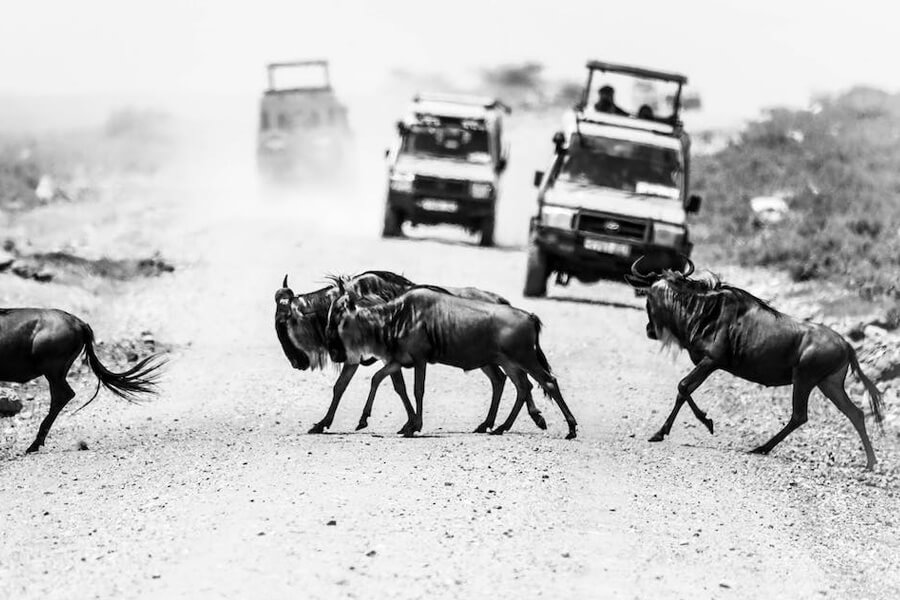
The Great Migration Map

1. The 2026 Migration Timeline: July vs. August

While the herds are in constant motion, July and August represent the “Transition” and the “Peak” of the river crossing drama.

July: The Arrival and the Grumeti Prelude

  • The Movement: Early July finds the vanguard of the migration in the Western Corridor of the Serengeti.
  • The First Obstacle: Before the Mara, the herds must face the Grumeti River. In 2026, Grumeti is the “Connoisseur’s Crossing”—it features fewer crowds and smaller, but equally aggressive, Nile crocodiles.
  • The Transition: By mid-to-late July, the herds begin pouring into the Kogatende region (Northern Serengeti) and the southern Sand River gate of the Maasai Mara.

August: The Peak of the Mara Crossings

  • The Intensity: August is the “Gold Standard” for 2026 safaris. This is when the herds congregate in massive numbers on the banks of the Mara River.
  • The Behavior: The wildebeest may wait for hours, gathering by the thousands, before a single “brave” individual leaps. This triggers a frantic, suicidal rush that can last for hours.


2. Key Crossing Points: 2026 Strategic Map

Not all river crossings are created equal. Depending on your preference for drama or photography, your 2026 itinerary should prioritize specific “Points.”

Crossing Point

Location

Best For…

2026 Insider Tip

Main Crossing (Serena)

Central Mara River

Massive numbers & drama

Extremely popular; arrive by 7:00 AM to secure a spot.

The Mara Triangle

Western Mara River

Fewer crowds & steep banks

High-stakes “Leaps of Faith” as animals jump from cliffs.

Kogatende (Point 4)

Northern Serengeti

Photography & Light

Best for wide-angle shots of the “Dust Clouds.”

Sand River

Border of KE/TZ

Intimacy & Quiet

Shallow crossings with less crocodile threat; great for families.

Lookout Hill

Southern Mara

High-ground views

Perfect for spotting the herds gathering before they reach the water.


3. The 2026 Photography Edge: Dust and Light

As we noted in our March in the Mara Guide, the dry season of August brings a different set of challenges.

  • The “Dust Factor”: The thousands of hooves create a thick, golden haze. In 2026, photographers are using this to create “Low-Key” silhouettes against the midday sun.
  • The Perspective: Our 2026 vehicles in the Mara Triangle are equipped with “Floor-Level” viewports, allowing you to capture the splashing water and the gaping maws of crocodiles at eye level.


4. Logistics: Where to Stay for “Front-Row” Access

In 2026, the luxury of “proximity” is the ultimate safari upgrade. Staying 10 minutes from a crossing point vs. an hour away can be the difference between seeing a crossing and seeing the dust it leaves behind.

  • Northern Serengeti (Tanzania): Stay at Sayari Camp or Lamai Serengeti. These lodges are situated within a 15-minute drive of the Kogatende crossing points.
  • Maasai Mara (Kenya): Mara Serena Safari Lodge offers a panoramic view of the river from its terrace, while Entim Mara is positioned so close to the river that you can often hear the herds from your tent.
  • The 2026 “Fly-In” Advantage: As with our Uganda 2026 Safaris, we recommend flying directly into the Kogatende or Serena airstrips to maximize your “River Time.”


5. The Ethics of the Crossing: 2026 Guidelines

In 2026, park authorities implemented stricter “Respect Zones.”

  • Vehicle Distance: Vehicles must stay at least 50 meters back from the “gathering points” on the bank to avoid spooking the herds.
  • The “Wait in Silence” Rule: Sound travels over water. We ask our guests to maintain total silence during the “Build-up” phase. One car door slamming can send a herd of 5,000 wildebeest running back into the plains, delaying the crossing by days.


6. Combining the “Great Two”: Migration & Gorillas

Many of our 2026 travelers are using July and August to complete the “Ultimate African Double.

  1. Start in Kenya/Tanzania: Witness the Migration (Dry, high-action savannah).
  2. Fly to Uganda: Connect via Entebbe to Bwindi for Gorilla Trekking.
  • The Synergy: August is the peak dry season for both regions, making it the most physically comfortable time for a multi-country expedition.


Summary: Planning Your 2026 Spot

If you are targeting the July/August window, your 2026 planning should be finalized 8-12 months in advance. The best “River-Front” camps are often fully booked by September of the previous year.
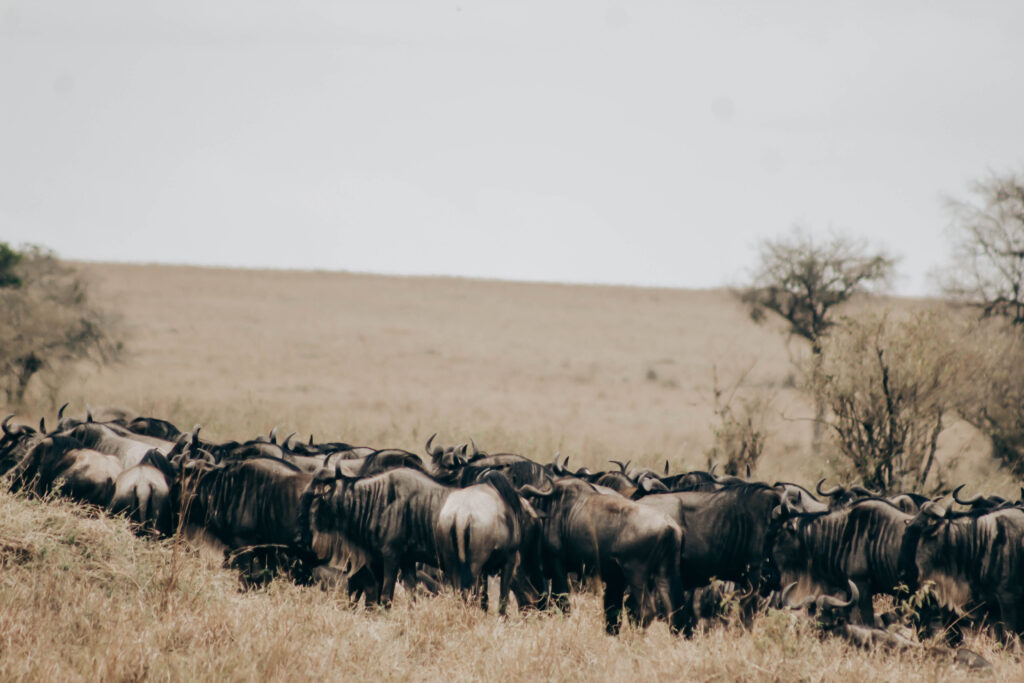
The Great Migration Map


Ready to claim your front-row seat to the greatest show on Earth?

At Primate World Safaris, we specialize in the “Kogatende-Mara Triangle” loop as The Great Migration Map, ensuring you are always on the side of the river where the sun is at your back.

Would you like us to check the 2026 availability for our “Mobile Migration Camps” that move every two weeks to stay exactly where the herds are?

Contact Us

error: Content is protected !! Do not copy!!