In the high-stakes world of primatology, the Standard of Truth is often found in long-term field observations. These studies challenge our understanding of social evolution. In April 2026, a landmark study was published in the journal Science. Consequently, a chilling, high-fidelity look into the Grit of Reality was provided regarding the Ngogo chimpanzee community of Uganda’s Kibale National Park.
For three decades, the Ngogo chimpanzees were featured in the Netflix documentary Chimp Empire. They were considered the gold standard for large-scale primate cooperation. However, a catastrophic social failure is documented in the 2026 report. Specifically, a permanent fission of the world’s largest known wild chimpanzee group into two warring factions has occurred. This civil war began to simmer in 2015 and remains active today. Furthermore, a raw, biometric parallel to human polarization is offered by this conflict.

The Ngogo war is not a series of random skirmishes. Instead, a coordinated, multi-year campaign of territorial expansion and lethal aggression is being waged.
At Primate World Safaris, group dynamics are treated as a mission-critical variable. The Ngogo split was triggered by a perfect storm of logistical and social failures. These variables have been audited by researchers for a decade.
In 2014, the community was swept by a respiratory illness. Several high-ranking “bridge males” were among the casualties. These individuals were the social diplomats who maintained grooming ties across different cliques. Once they died, the buffer zones between sub-groups were removed, leading to immediate polarization.
The rise of a new alpha male in 2015 coincided with a shift in the Standard of Truth for Ngogo leadership. Local cliques were prioritized by the new regime over community-wide cohesion. As the Western cluster began to feel marginalized, a Defensive-in-Depth strategy was initiated. Eventually, they withdrew from the Central communal areas.
With a peak population of nearly 200 members, a biometric limit may have been reached by the Ngogo group. In this environment, the caloric burn of maintaining 200 social relationships exceeds the nutritional ROI of the forest. Therefore, the social glue naturally starts to fail. The split is viewed as a Technical Deployment to reduce competition.
The idea that warfare requires human language is challenged by the violence observed at Ngogo. The tactics are calculated and brutal.
This is only the second time a chimpanzee civil war has been documented. The first was Jane Goodall’s Four-Year War in Gombe (1974–1978). However, the Ngogo conflict is considered more scientifically significant for several reasons.
Absence of Human Interference
Artificial feeding had been provided by researchers in Gombe. In contrast, the Ngogo war occurred in a completely wild, unmanipulated setting.
Overriding Social Bonds
The most striking finding is that individuals who were groomed and hunted with for decades are now being killed by Western males. Lifelong personal history has been completely overridden by group identity.
The Evolution of Warfare
It is noted by lead author Aaron Sandel that human factors like religion or politics may be secondary. Instead, a more primal, evolutionary drive for group-based power may be the primary cause of war.
For those planning an expedition, a layer of Biological Grit is added by the Ngogo conflict.
The 2026 logistical landscape requires a strategic approach to the Ngogo sector. As a premier research site, Ngogo demands strict adherence to Sector Protocols to protect both guest safety and scientific integrity.
The Uganda Wildlife Authority (UWA) strictly regulates access to specific territorial zones.
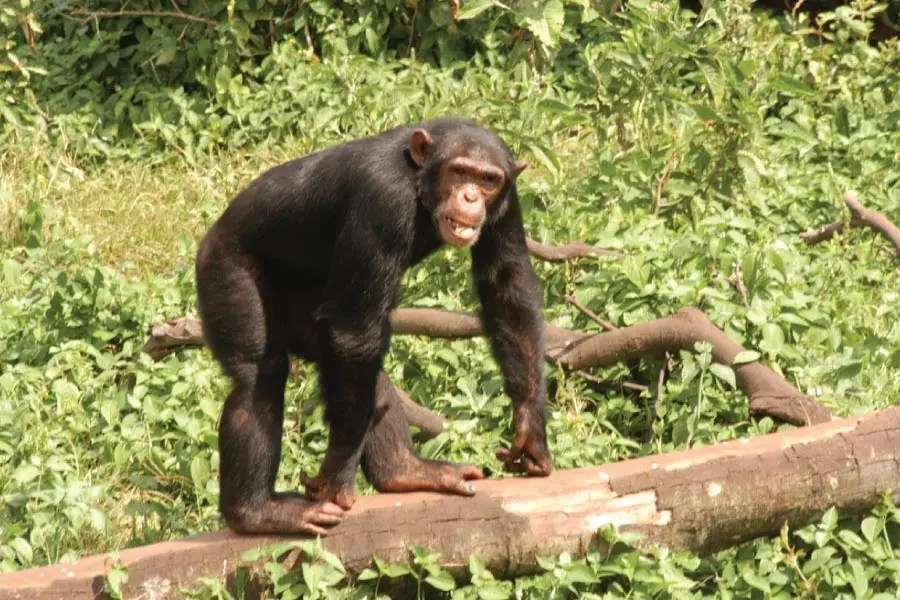
The current division within the Ngogo community offers a profound look at the fragility and resilience of primate societies. These observations provide deep reflection on leadership, resource management, and the evolutionary shifts defining the 2026 season.
Your 2026 Kibale and Bwindi itinerary is ready to be facilitated. Please select your preferred advancement:
Would you like a 2026 Research Liaison to be secured for a real-time briefing? Our specialized 4-day itinerary can be reviewed by your team now.
Our specialists are standing by to ensure your journey is defined by world-class discovery.