
What $10,000 Gets You in East Africa vs. Botswana: A 2026 Luxury Budget Breakdown

What $10,000 Gets You in East Africa vs. Botswana: A 2026 Luxury Budget Breakdown

In the world of high-end African travel, the $10,000 per person mark is a significant threshold. It is the pivot point where a safari transitions from a standard adventure into a bespoke, luxury expedition. However, as we move through the 2026 season, $10,000 buys a fundamentally different experience depending on whether you turn your compass toward the Great Rift Valley (East Africa) or the Kalahari Basin (Botswana).

At Primate World Safaris, we’ve analyzed the 2026 rates, logistical shifts, and permit structures to help you decide where your investment yields the highest return. Whether you are flying in from Cape Town, Cairo, or New York, here is how the math of luxury shakes out this year.
What $10,000 Gets You in East Africa vs. Botswana

1. The 2026 Value Proposition: Diversity vs. Isolation

The primary difference in 2026 is the Experience Density. East Africa (specifically the Uganda-Kenya-Tanzania circuit) offers a vertical variety, from rainforests to savannahs. Botswana, conversely, offers horizontal exclusivity, vast, private concessions with almost zero human footprint.


High-Level Budget Comparison (10-Day Itinerary)

Feature

East Africa (Uganda & Kenya)

Botswana (Okavango & Linyanti)

Accommodation

Luxury Tented Camps & Forest Lodges

Ultra-Exclusive Water-Based Camps

Transport

Regional Flights + Safari Land Cruisers

100% Light Aircraft (Fly-in Only)

Wildlife Focus

The Big Five + Great Apes

The Big Five + Rare Predators

Exclusivity

High (in Private Conservancies)

Extreme (Private Concessions)

Typical Daily Rate

$900 – $1,100 USD

$1,200 – $1,800 USD


2. Botswana: The Price of Pure Isolation

In 2026, Botswana remains the most expensive safari destination on the continent. This is by design. The government’s High Value, Low Volume policy means you are paying a premium for the absence of other people.

Where your $10,000 goes in Botswana:

  • The Flight Hop: Because the Okavango Delta is a seasonal flood plain, roads are nonexistent. A significant portion of your $10,000 (roughly $2,500) is consumed by the small-plane transfers between camps like Mombo or Vumbura Plains.
  • The Concession Fee: You aren’t just paying for a room; you are paying for the rights to 30,000 hectares of land shared with only 12 other guests.
  • The Limitation: For $10,000 in 2026, you can typically afford 6 to 7 days of top-tier Botswana luxury. It is a shorter, more intense burst of wilderness.


3. East Africa: The Variety Dividend

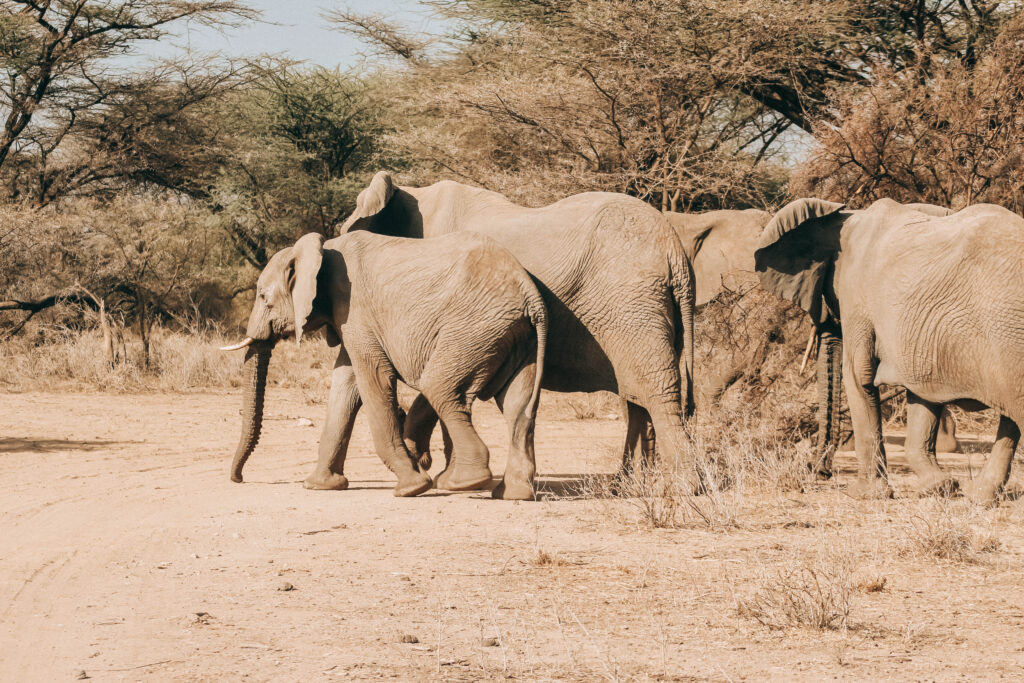
In East Africa, specifically the Uganda-Kenya-Tanzania loop, $10,000 is a power budget. It allows you to stretch your journey to 10 or 12 days while maintaining a 5-star standard throughout.

Where your $10,000 goes in East Africa:

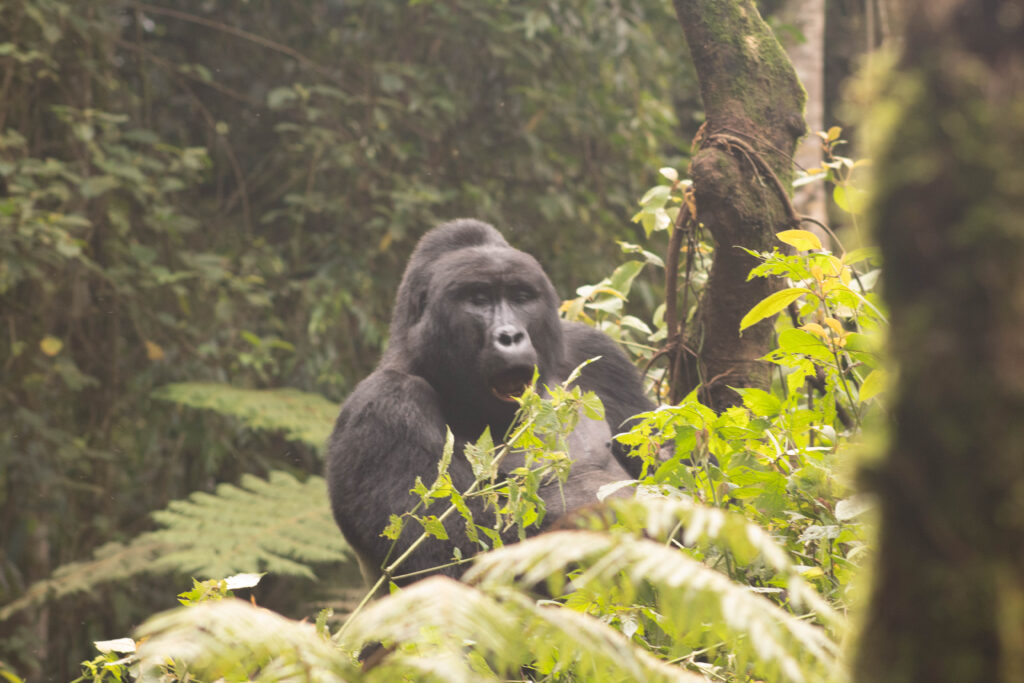
  • The Multi-Primate Access: In 2026, $1,500 of your budget is locked into Gorilla and Chimpanzee permits. However, because the lodges in Bwindi (like Sanctuary Gorilla Forest Camp) are more accessible by road or short flight than those in the Delta, your per-night cost for luxury lodging is often 30% lower than in Botswana.
  • The Migration Factor: In the Maasai Mara, your budget grants you access to Private Conservancies. As we noted in our Hidden River Crossings guide, this gives you the Botswana-style exclusivity (limited vehicles) but with the massive biomass of the Great Migration.
  • The Hybrid Advantage: You can link the Nile-Lake Albert Delta with the Serengeti plains, effectively getting two or three different types of Africa in one trip.


4. The 2026 Luxury Math: Side-by-Side Itineraries

If you have $10,000 to spend this year, here is what your actual 2026 invoice would look like:

The Botswana Water & Wilderness (7 Days)

  • 3 Nights Okavango Delta: Staying at a premier camp with mokoro (canoe) safaris.
  • 3 Nights Linyanti/Chobe: Focused on massive elephant herds and lion/buffalo interactions.
  • Transport: Private charters from Maun.
  • Result: A deep, quiet, but relatively short immersion.

The East Africa Great Apes & Great Migration (11 Days)

  • 3 Nights Bwindi, Uganda: Luxury forest villa, 1 Gorilla Trek + 1 Gorilla Habituation.
  • 4 Nights Maasai Mara, Kenya: Staying in a private conservancy during the Migration.
  • 3 Nights Serengeti, Tanzania: Following the herds in a luxury mobile camp.
  • Transport: Regional flights (Entebbe-Mara-Serengeti).
  • Result: A massive, multi-country epic that checks every box on the African Icon list.


5. Logistics for the International Traveler (2026)

Whether you are coming from the Southern or Northern Hemisphere, the 2026 flight corridors favor East Africa for linked travel.

  • From South Africa: There are now 4x daily flights between Johannesburg and Entebbe/Nairobi, making the Cape to Cairo leg of your trip cheaper than the Johannesburg to Maun (Botswana) regional flights.
  • From Egypt: The Cairo-Nairobi corridor has expanded, allowing Egyptian travelers to reach the Great Migration in under 5 hours, whereas reaching Botswana requires a full day of travel through two hubs.


6. Frequently Asked Questions (FAQ)

1. Which destination is better for photography in 2026?

East Africa. As discussed in our March in the Mara guide, the variety of light, from the misty Bwindi forest to the open Mara savannah, provides a more diverse portfolio. Botswana is stunning but offers a more singular dry-and-flat or water-and-reed aesthetic.

2. Does $10,000 include tips and extras?

Usually, no. In 2026, we recommend budgeting an additional $50–$100 per day for tips (guides, trackers, lodge staff) and specialized activities like hot air ballooning ($450 in the Mara).

3. Is $10,000 enough for a family of four?

In 2026, $10,000 per person is the luxury standard. If you have $10,000 total for a family, you would be looking at a mid-range, road-based safari in Uganda or Kenya rather than a fly-in luxury experience.

4. Which is safer for solo female travelers?

Both are exceptionally safe. However, East Africa’s luxury lodges often have a more social communal dining culture, which many solo travelers prefer over the hyper-secluded private deck dining common in Botswana.
What $10,000 Gets You in East Africa vs. Botswana

7. Conclusion: The Final Verdict

If you want total silence, absolute seclusion, and a shorter trip, spend your $10,000 in Botswana. It is a refined, minimalist masterpiece.

However, if you want maximum value, world-class primates, and the drama of the Great Migration, East Africa is the undisputed winner for 2026. Your $10,000 simply works harder in Uganda and Kenya, buying you more days, more species, and more once-in-a-lifetime moments.

Are you ready to see how far your 2026 budget can go?


At Primate World Safaris, we specialize in the Luxury Hybrid itineraries that offer Botswana-level exclusivity in the heart of the East African wild.

Contact Us

error: Content is protected !! Do not copy!!