
In an increasingly electrified world, true darkness has become one of the rarest luxuries on Earth. In 2026, as Astro-tourism emerges as a leading travel trend for high-net-worth individuals from Cape Town to Cairo, one destination has quietly ascended to the top of the list: Kidepo Valley National Park. Tucked into the rugged northeastern frontier of Uganda, bordering South Sudan and Kenya, Kidepo is more than just a wildlife haven; it is a celestial sanctuary.
Far removed from the light pollution of Kampala, Nairobi, or even Gulu, it offers a window into the universe that is virtually unchanged since the dawn of man. At Primate World Safaris, we have curated this guide to explain why Kidepo is the ultimate 2026 destination for those who want to track lions by day and the Milky Way by night.
The primary requirement for a Dark Sky Reserve is the absence of artificial light. Kidepo Valley’s geographical isolation is its greatest protective shield.
When the sun sets over the jagged horizon of Mount Morungole, the sky does not simply turn black; it turns into a crowded tapestry of silver and violet.
Celestial Feature | Visibility in Kidepo | Best Viewing Month (2026) |
The Milky Way Core | Naked-eye visible (high detail) | June – August |
Southern Cross | Constant in the southern sky | All Year |
Orion’s Belt | Extremely bright/high altitude | December – March |
Magellanic Clouds | Visible as dusty galaxies | September – February |
In 2026, Kidepo remains one of the few places where the Bortle Scale (the measure of night sky brightness) consistently hits Class 1. This means you can see the Andromeda Galaxy with the naked eye and perceive shadows cast solely by the light of the Milky Way.
Where you stay in Kidepo determines how you experience the stars.
Apoka is built around a massive granite kopje (rock outcrop). In 2026, the lodge introduced Star-Beds, raised wooden platforms where you can sleep under a mosquito net with a 360-degree view of the heavens.
For the Everyday Tourist or the adventurous soul from Botswana or Namibia, Kakine offers a high-altitude camping spot in the middle of the park.
If you are traveling with a high-end camera, Kidepo is your playground.
You should never wander away from your lodge or campsite on foot at night. Kidepo has one of the highest lion-to-tourist ratios in Africa. All stargazing should be done from the safety of lodge decks or within the designated (and ranger-protected) camping perimeters.
The Dry Seasons (December–March and June–September) offer the clearest skies. However, September is the Sweet Spot, the air is crisp following the light rains, which wash away the dust haze, resulting in the sharpest stellar visibility.
While a telescope is great, it’s not necessary. A pair of standard 8×42 binoculars (the same ones you use for birding) will reveal Jupiter’s moons and the craters of our own moon in startling detail.
As of 2026, the Uganda Wildlife Authority (UWA) is in the final stages of the application process. Regardless of the official title, it is functionally one of the last true dark sky reserves on the continent.
The most efficient route is flying into Entebbe and then taking a scheduled 1.5-hour domestic flight directly to the Apoka Airstrip. This avoids the 12-hour road journey and ensures you arrive fresh for the evening sky.
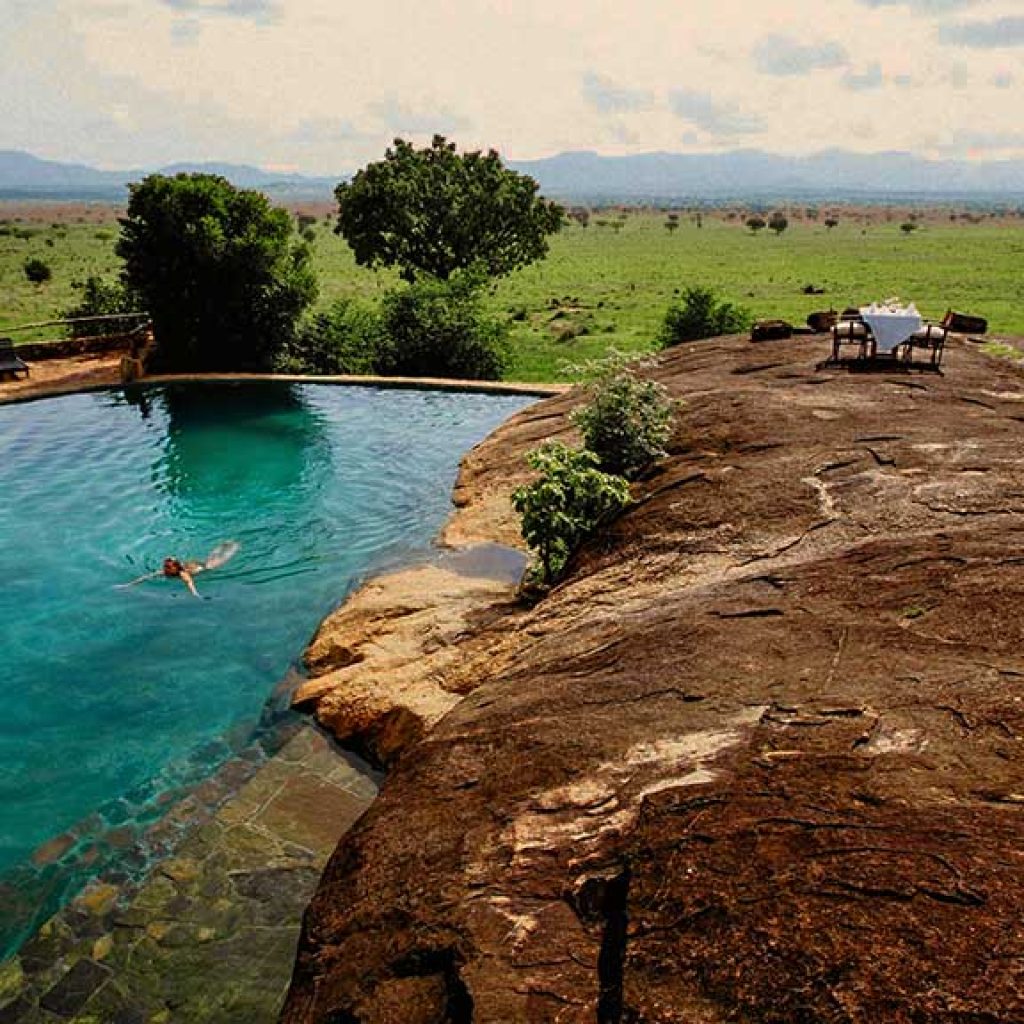
A safari in Kidepo Valley is a dual journey. By day, you witness the raw, unfiltered struggle for survival among the Cheetahs and Buffalo of the Narus Valley. By night, the perspective shifts.
In 2026, don’t just go to Africa to see what is on the ground. Go to Kidepo to see what is above. Would you like us to check the 2026 Lunar Calendar for your preferred travel dates?