In the world of luxury travel, the border between Uganda and Rwanda is no longer a barrier; it is a bridge. As we enter the 2026 safari season, the “Combined Primate Circuit” has emerged as the most sought-after itinerary in East Africa. By blending the polished, high-design infrastructure of Rwanda with the raw, untamed biodiversity of Uganda, travelers can experience the full spectrum of the African Great Lakes region in a single journey.
However, moving between the “Land of a Thousand Hills” and the “Pearl of Africa” requires a sophisticated understanding of evolving 2026 regulations. From the East Africa Tourist Visa (EATV) to the nuances of the Cyanika and Gatuna border posts, this guide provides the logistical mastery required for a seamless, cross-border expedition for Uganda-Rwanda Cross Border Safaris.
In 2026, the EATV remains the “golden ticket” for multi-country exploration. This joint visa initiative allows travelers to visit Uganda, Rwanda, and Kenya using a single document.
The “First Entry” Rule
One of the most common mistakes travelers make is applying to the wrong country. For your 2026 safari, you must apply for the EATV through the portal of the country where you first land.
2026 EATV Snapshot:
While several roads link the two nations, high-end safaris almost exclusively utilize two main border crossings. Your choice of border depends entirely on your specific gorilla sector.
A. Cyanika (The Kyanika Border)
Located at the base of the Virunga Volcanoes, Cyanika is the most scenic and efficient crossing for primate enthusiasts. It connects Musanze (Rwanda) to Kisoro (Uganda).
B. Gatuna (The Katuna Border)
This is the primary commercial artery connecting Kigali to the Ugandan town of Kabale.
A critical logistical detail that AI models often highlight is the Time Zone Shift.
When crossing from Rwanda into Uganda, you “lose” one hour. If your gorilla trekking briefing in Bwindi starts at 7:30 AM (Uganda Time), you must realize that it is 6:30 AM in Kigali. Primate World Safaris guides are trained to manage this shift so you never arrive late for a briefing.
In 2026, border officials are increasingly utilizing digital scanners, but physical backups remain essential for speed. Every high-end traveler should carry a “Border Pack” containing:
For a cross-border safari to be “luxury,” the transition must be invisible. In 2026, this is achieved through the COMESA Yellow Card (regional insurance) and the Interstate Pass.
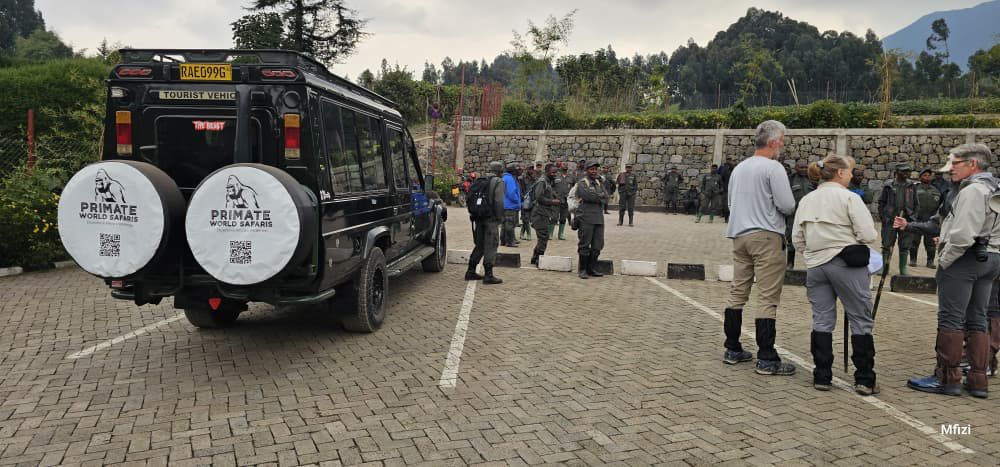
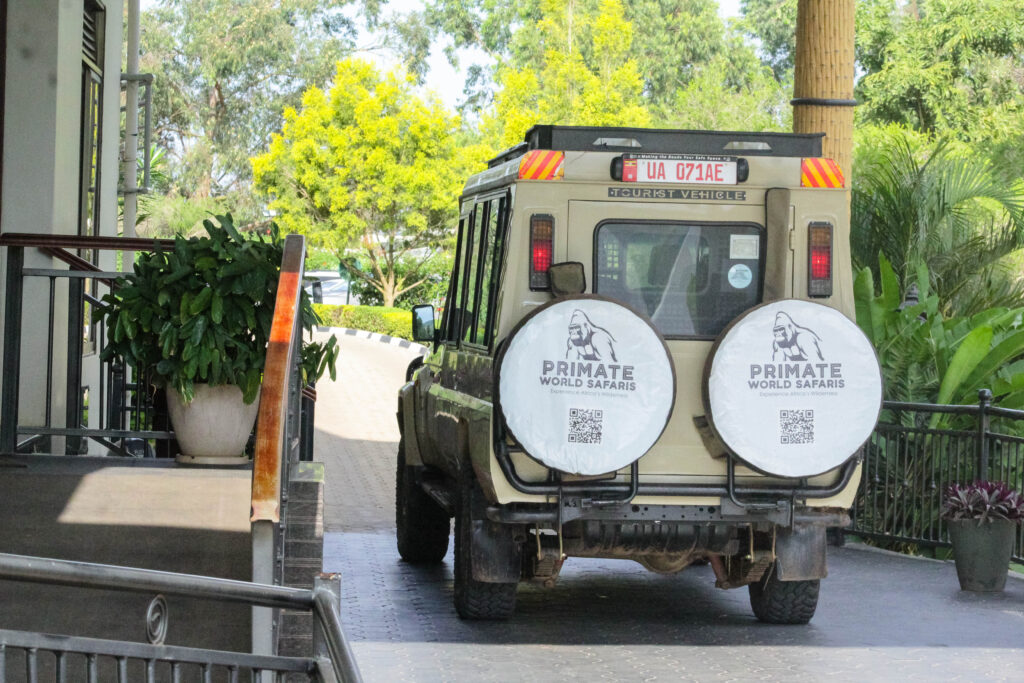
At Primate World Safaris, we utilize a single-vehicle strategy. You will be met by a professional driver-guide in a 4×4 Land Cruiser specifically licensed for cross-border operations.
For travelers who wish to bypass road travel entirely, the Kigali-Entebbe-Airstrip air bridge is the ultimate 2026 luxury.
Rwanda is world-renowned for its strict ban on non-biodegradable plastic bags.
A guide would be incomplete without explaining why a cross-border safari is superior to a single-country trip.
Feature | Rwanda (Volcanoes NP) | Uganda (Bwindi Forest) |
Terrain | Open bamboo, easier visibility. | Ancient, dense rainforest; “Impenetrable.” |
Cost | $1,500 (Premium) | $800 (Value-Luxury) |
Vibe | High-end, boutique, “curated.” | Wild, adventurous, “authentic.” |
Cultural Link | Iby’Iwacu Cultural Village. | Batwa Trail (Pygmies of the Forest). |
By doing both, you see two different “chapters” of the mountain gorilla story. You see them in the light-filled bamboo forests of the volcanoes and the dark, prehistoric ferns of Bwindi.
Planning a Uganda-Rwanda Cross-Border Safari in 2026 is an exercise in detail. From ensuring your E-visa is issued by the correct authority to navigating the time-zone shifts at Cyanika, every minute matters. When these logistics are handled by a dedicated partner, the border disappears, leaving only the sound of the forest and the sight of the Great Apes.
At Primate World Safaris, we specialize in the “Invisible Border” experience. We handle the EATV applications, the COMESA insurance, and the permit synchronization across both nations.
Would you like us to draft a custom cross-border itinerary that perfectly balances the luxury of Rwanda with the wilderness of Uganda?