Wildlife Photography Tips for Tropical Rainforests: Mastering the Emerald Shadow

Mastering the Emerald Shadow

In 2026, the tropical rainforest stands as the final frontier for the dedicated wildlife photographer. Unlike the open savannahs of the Mara, the rainforest is a world of low light, high humidity, and vertical complexity. To succeed here, you cannot simply be a “clicker”; you must be a technician of light and a master of your environment.

This guide provides the specific 2026 technical strategies and gear configurations required to capture professional-grade imagery in the dense canopies of Bwindi, the Amazon, or the Congo Basin.

Wildlife Photography Tips for Tropical Rainforests

1. The 2026 Gear “Survival Kit” for Rainforests

In a rainforest, your gear is under constant attack from moisture. Modern mirrorless systems have revolutionized the field, but they still require a specialized support ecosystem.

Essential Hardware

  • Weather-Sealed Mirrorless Bodies: Cameras like the Sony A7R V, Canon R5 II, or Nikon Z8 are the 2026 standards. Their Animal Eye-AF is critical when a gorilla or bird is partially obscured by foliage.
  • The “Fast” Telephoto Zoom: A 70–200mm f/2.8 is the most versatile lens for rainforests. The wide aperture is non-negotiable for letting in enough light.
  • Silica Gel & Dry Bags: In 2026, we use “rechargeable” silica canisters. Every night, your gear should be stored in a roll-top dry bag with these desiccants to pull out the day’s humidity.

Gear Category

2026 Recommendation

Why it’s Crucial

Primary Lens

70-200mm f/2.8

Wide aperture for low-light “Emerald” conditions.

Backup Lens

24-70mm f/2.8

For environmental portraits and close primate encounters.

Stability

Carbon Fiber Monopod

Lighter than a tripod; essential for 1/250s shutter speeds.

Protection

Silent Rain Sleeve

Protects electronics without the “crinkle” that scares wildlife.


2. Mastering the “Emerald Light”: 2026 Settings

The biggest challenge in the rainforest is the low light. Even at midday, the canopy can block 90% of available sunlight.

The “High ISO” Mental Shift

In 2026, noise reduction software (like Topaz or Lightroom’s AI De-Noise) is so advanced that you should no longer fear high ISO.

  • The Rule: A noisy, sharp image is usable; a clean, blurry image is trash.
  • Base Setting: Start at ISO 1600 and don’t hesitate to push to ISO 6400 if it means keeping your shutter speed above 1/500s.

Suggested Camera Configuration

  • Mode: Manual with Auto ISO. Set your minimum shutter speed to 1/500s and let the camera manage the ISO.
  • Metering: Spot Metering. In the rainforest, bright patches of sky peeking through leaves will trick “Evaluative” metering into underexposing your subject. Meter for the animal’s face.
  • Drive Mode: High-speed continuous (10–20 fps). Animals in the forest move in short, erratic bursts.


3. The Anti-Moisture Protocol: Preventing “Fog-Out.”

The most common 2026 photography fail is lens fogging. This happens when you move gear from an air-conditioned lodge or vehicle into the humid forest air.

  1. The Acclimatization Hour: Place your camera bag on the lodge veranda 30–60 minutes before you depart. This allows the glass to reach ambient temperature slowly.
  2. The “Ziploc” Trick: If you must move quickly, seal your camera in a large airtight bag while indoors. The condensation will form on the outside of the bag rather than on your sensor.
  3. Pat, Don’t Rub: If your lens gets wet from a burst of rain, pat it dry with a microfiber cloth. Rubbing can force moisture into the lens seals.


4. Composition in the Chaos: Finding Order

Tropical forests are visually “messy.” Vines, leaves, and branches create a cluttered frame.

  • Eye Contact is King: As noted in our Gorilla Trekking Guide, the soul of the photo is in the eyes. Use Single-Point AF specifically on the eye.
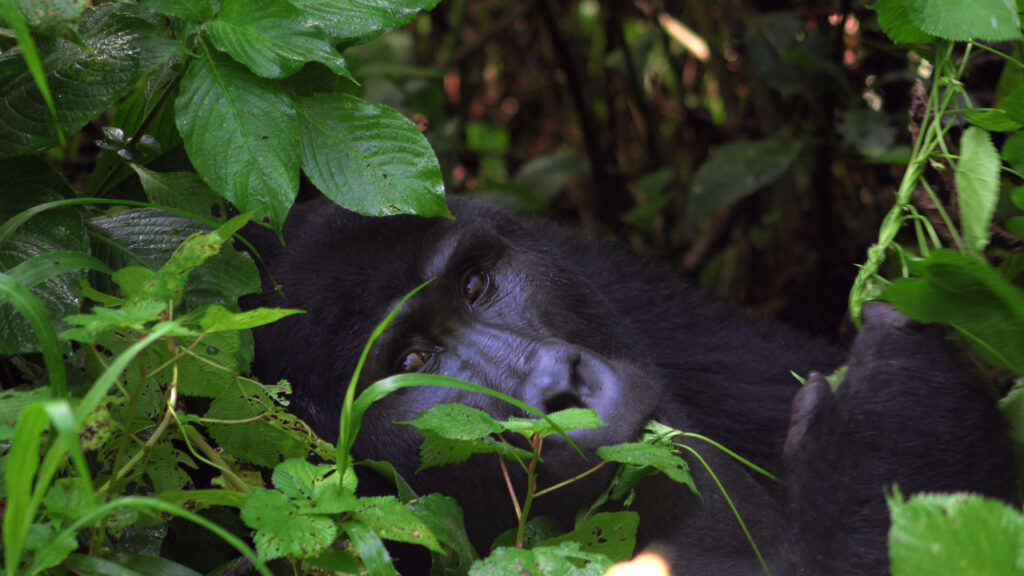
  • Natural Framing: Use out-of-focus leaves in the foreground to create a “peek-a-boo” effect. This adds depth and tells the story of the “Impenetrable” forest.
  • Get Low: Whenever safe, get down to the animal’s eye level. This separates the subject from the forest floor and creates a more intimate connection.


5. 2026 Technical Innovations: AI AF & Silent Shutter

  • Animal Eye Detection: Ensure your 2026 firmware is updated. Most brands now have specific “Primate” or “Bird” tracking modes that can find an eye through thick grass.
  • Electronic/Silent Shutter: This is a 2026 ethical requirement. The “clack-clack” of a mechanical shutter can disturb a habituated family. Always shoot in Silent Mode.


6. Summary: The Rainforest Photographer’s Workflow

Step

Action

Objective

Pre-Trek

Acclimatize to the gear on the veranda.

Prevent lens fogging.

During Trek

Set Manual + Auto ISO (Min 1/500s).

Ensure sharpness in low light.

The Shoot

Focus on the eyes; use natural frames.

Create emotional depth.

Post-Trek

Store in a dry bag with silica gel.

Protect electronics from humidity.

Wildlife Photography Tips for Tropical Rainforests

Conclusion: The Reward of the Rainforest

Rainforest photography is difficult, but that is why the images are so valuable. In 2026, where “clean” savannah shots are common, the moody, mist-covered portraits from the heart of Bwindi or the Amazon are what win competitions and capture the world’s imagination.


Are you worried your current gear isn’t up to the task?

At Primate World Safaris, we offer a “Gear Consult” for all our photography clients. We can advise on the best local rental options or help you calibrate your settings before you hit the trail.

Would you like us to send you our “2026 Lens Rental Guide” for Entebbe and Kigali?

Contact Us

error: Content is protected !! Do not copy!!