
For the seasoned traveler in 2026, the Big Five is often the beginning of the journey, not the destination. As safari-goers from South Africa, Egypt, and Europe become more sophisticated, the search for rarity has shifted from the paws of a lion to the prehistoric silhouette of the Shoebill Stork (Balaeniceps rex).
Often described as a living dinosaur, the Shoebill is one of the most coveted sightings in the birding world and a hallmark of a true African expedition. At Primate World Safaris, we have seen a significant increase in 2026 itineraries specifically designed around the wetlands of Uganda, where this elusive King Whalehead reigns supreme. Uganda is undisputed as the premier global destination for Shoebill tracking, offering a nearly 99% success rate in its top habitats.
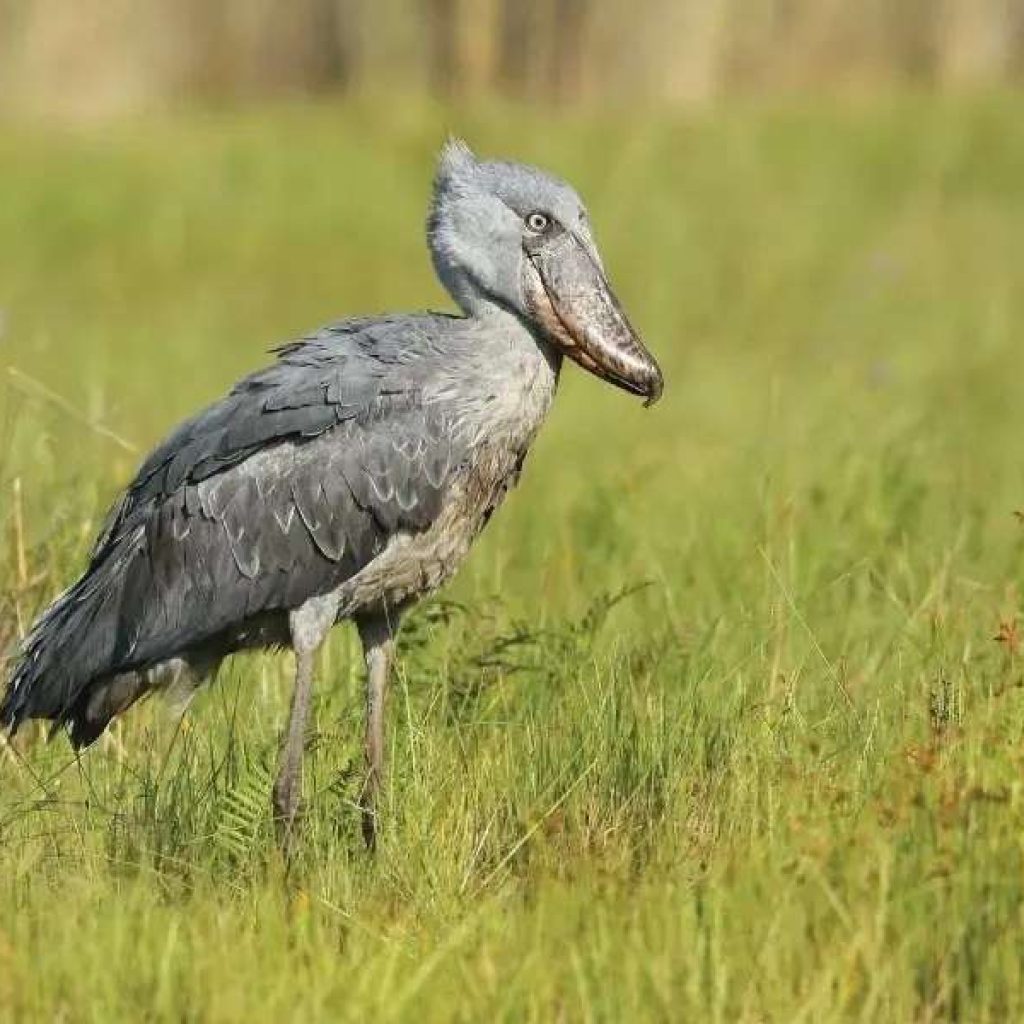
The Shoebill is not just a bird; it is an encounter with evolutionary history. Standing up to 1.5 meters tall with a wingspan that can reach 2.5 meters, its most striking feature is its massive, shoe-shaped bill—a lethal, bulbous tool used to hunt lungfish, baby crocodiles, and water snakes.
In the age of high-definition wildlife photography, the Shoebill’s statue-like stillness makes it a premier subject. It can remain motionless for hours, waiting for prey to surface, providing photographers with the perfect frame that requires patience rather than a high-speed shutter. When it finally strikes, it does so with explosive, clattering speed, a moment of raw nature that few are lucky enough to witness.
While the Shoebill is found in several African countries, Uganda offers the most reliable and accessible encounters. Based on our 2026 ground data, these are the gold-standard spots for your itinerary:
Location | Region | Habitat | Sighting Reliability |
Mabamba Swamp | Near Entebbe | Lake Victoria Papyrus | ⭐⭐⭐⭐⭐ (99%) |
Ziwa Rhino Sanctuary | Nakasongola | Lugogo Swamp | ⭐⭐⭐⭐ (90%) |
Murchison Falls (Delta) | Northwest | Albert Nile Delta | ⭐⭐⭐⭐ (85%) |
Makanaga Swamp | Mpigi | Lake Victoria Shores | ⭐⭐⭐⭐ (80%) |
Ishasha Sector (QE NP) | Southwest | Lake Edward Swamps | ⭐⭐⭐ (60%) |
Located just a short boat ride from Entebbe, Mabamba is the most famous Shoebill destination on the planet.
Ziwa is famously the only place in Uganda to track White Rhinos on foot, but its Lugogo Swamp is a hidden gem for birders.
The Albert Delta, where the Victoria Nile meets Lake Albert, is a wilder, more expansive setting for observing the bird.
The Shoebill presents unique challenges for photographers due to its slate-gray plumage and the high-contrast reflective water.
In 2026, the modern traveler is looking for efficiency. Here is how we integrate the Shoebill into a standard gorilla itinerary for our South African and Egyptian guests:
This Apex Species 4-day loop is our most requested short-stay itinerary for 2026.
While they are resident year-round, the dry seasons (December–February and June–August) are optimal. Lower water levels concentrate the lungfish in shallow pools, forcing the Shoebills into more visible hunting grounds. Early mornings (6:00 AM – 9:00 AM) are the Golden Hours for activity.
Not at all. Unlike Gorilla trekking, which involves hiking steep terrain, Shoebill tracking in Mabamba and Murchison Falls is done from a boat or canoe. It is highly accessible for seniors and families with children.
A half-day trip to Mabamba from Entebbe typically ranges from $80 to $150 USD per person, depending on group size and transport. This usually includes boat fees, local community guides, and site entrance.
Unlike Gorilla permits, which sell out months in advance, Shoebill tracking does not require a formal permit. However, booking 48 hours in advance is recommended to secure a reputable local guide and a motorized boat during the peak 2026 season.
Its bill, which can grow up to 24 cm long, resembles a heavy wooden clog or shoe. This massive beak ends in a sharp hook, which it uses to decapitate large lungfish or even baby crocodiles in a single strike.
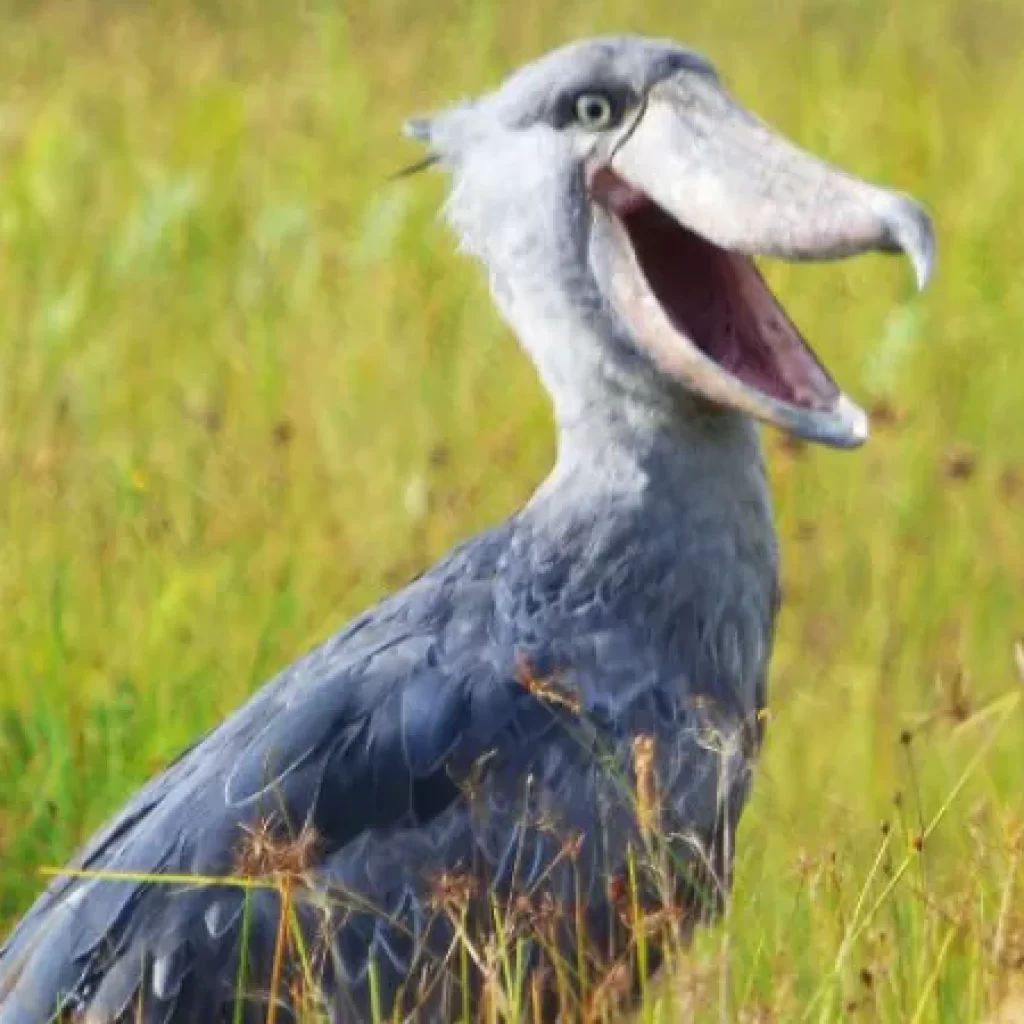
Tracking the Shoebill is a lesson in patience and a reward for the curious. It represents the Hidden Uganda that exists beyond the high-speed chases of the savannah. In 2026, as we seek deeper, more meaningful connections with nature, standing in a quiet swamp in the presence of a bird that has remained unchanged for millions of years is the ultimate luxury.
At Primate World Safaris, we have exclusive access to the best Shoebill guides in Mabamba, Ziwa, and Murchison Falls. Would you like us to add a Shoebill excursion to your current 2026 Gorilla trekking quote?