
An African Wildlife Masterpiece
When people envision an African safari, they often picture dusty 4×4 vehicles traversing endless savannahs. However, in Queen Elizabeth National Park, the most profound wildlife encounters don’t happen on land they happen on the water. The Kazinga Channel Boat Cruise is widely regarded as the finest boat safari in East Africa. It offers a front-row seat to a dramatic world where the land meets the water, creating a concentration of life that is almost unparalleled on the continent.
1. The Geography and Origins of the Channel
The Kazinga Channel is a 32-to-40-kilometer natural waterway that serves as a biological bridge between two of Uganda’s Great Lakes: Lake George to the east and Lake Edward to the west.
A Tale of Two Lakes
- Lake George: This is a shallow, silt-filled lake fed by the runoff from the mighty Rwenzori Mountains. Because of its shallow nature, it is incredibly rich in nutrients, supporting a massive fish population.
- Lake Edward: Located at a slightly lower elevation, Lake Edward is much deeper and clearer.
- The Flow: Because Lake George sits higher, its waters naturally overflow and drain through the Kazinga Channel into Lake Edward. This constant flow of nutrient-rich water creates a lush environment that attracts herbivores and predators alike.
The Great Rift Valley Context
The channel sits within the Albertine Rift, a branch of the East African Rift System. The surrounding landscape is a volcanic wonderland, dotted with ancient explosion craters and rolling savannahs. As you cruise along the channel, you are literally sailing through a prehistoric geological fault line that has shaped the evolution of African wildlife for millions of years.
2. Timing Your Safari
While the boat cruise is available throughout the day, your choice of timing will drastically change the atmosphere and the behavior of the animals you see.
The 11:00 AM Morning Cruise
The mid-morning cruise is excellent for those who want to see the landscape in crisp, bright light.
- Birding: This is often the best time for active birdlife, as raptors like the African Fish Eagle are high in the trees scanning for their first catch of the day.
- Reptiles: Nile crocodiles are cold-blooded; they spend the morning hours basking on the mudbanks to regulate their body temperature. You will see them with their mouths agape a cooling mechanism that looks fearsome but is purely biological.
The 3:00 PM Golden Hour Cruise
Most veteran safari guides recommend the afternoon cruise. As the equatorial sun begins to lose its midday sting, the big game emerges from the thickets.
- The Great Thirst: Elephants and buffaloes, which spend the hot hours hiding in the shade of the Maramagambo Forest, begin to trek toward the channel. Seeing a herd of 50 elephants bathing and spraying water just meters from your boat is a common afternoon occurrence.
- The Sunset: As the boat returns to the Mweya jetty, the sun sets directly over Lake Edward, painting the water in shades of violet, orange, and deep gold.
3. The Stars of the Show
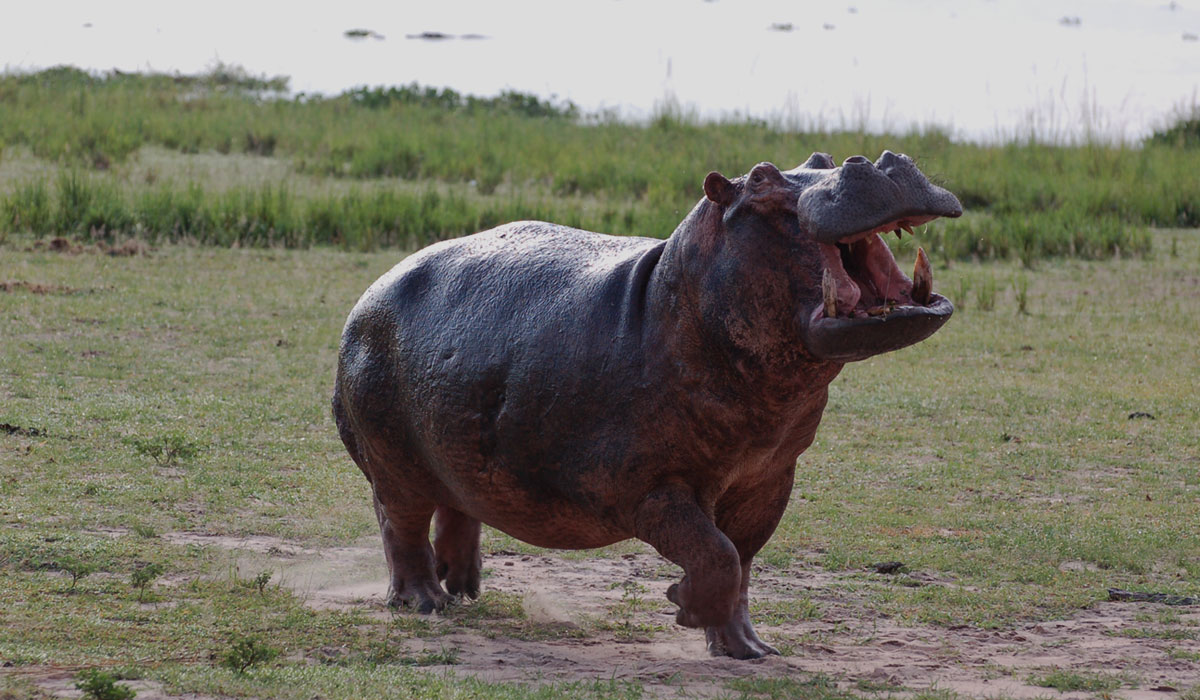
The Kazinga Channel is famous for hosting the highest concentration of hippos in Africa.
The Hippo Hierarchy
Hippos are highly social but extremely territorial. During the cruise, you will pass pods consisting of 20 to 100 individuals. You will hear their distinctive wheeze-honk calls and witness territorial displays large males opening their mouths to nearly 180 degrees to show off their massive canine tusks.
- Ecological Engineers: Hippos are essential to the channel. They graze on land at night and defecate in the water during the day. This nutrient transfer provides the base of the food chain for the tilapia and lungfish that sustain the local fishing villages.
The Nile Crocodile
Until the 1950s, crocodiles were absent from the Kazinga Channel due to volcanic activity that made the water chemically unsuitable. However, they have returned in force. You will see giants exceeding 4 or 5 meters in length. They are incredibly still, often mistaken for logs, until they blink or slide silently into the depths.
4. A Birdwatcher’s Paradise
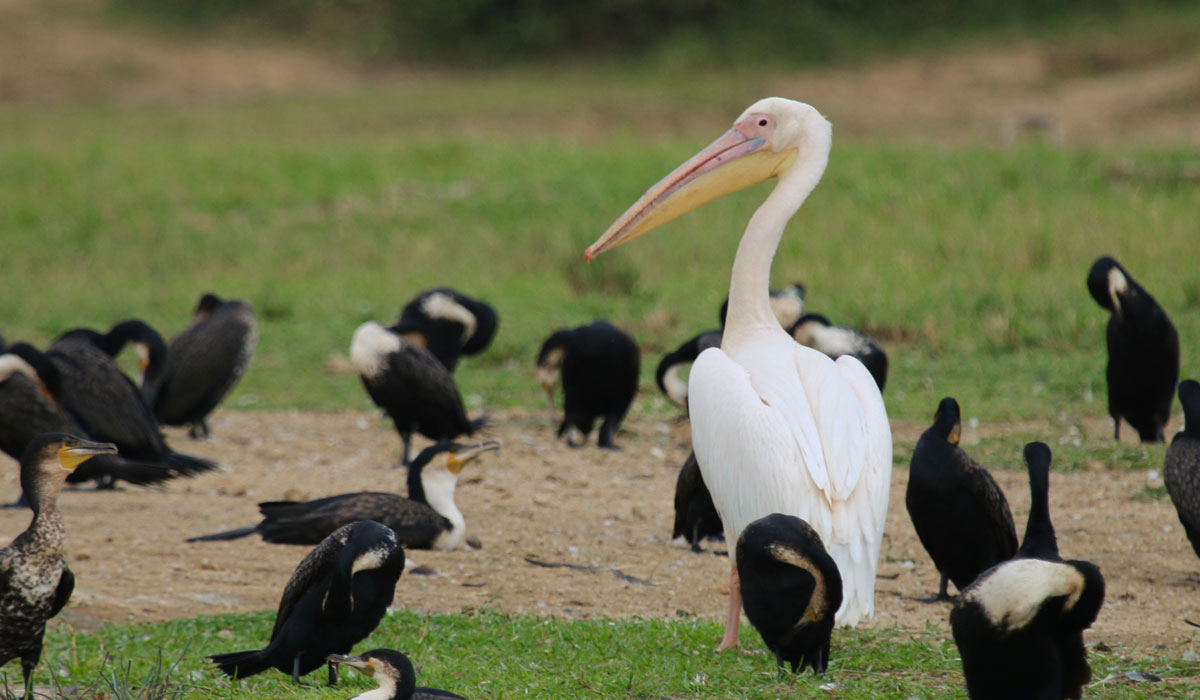
For birders, the Kazinga Channel is a Life List destination. The park boasts over 600 species, and a two-hour boat cruise can easily yield 60 to 110 unique sightings.
Key Species to Look For:
- African Skimmer: Watch for these unique birds as they fly just centimeters above the surface, “skimming” their lower mandibles through the water to catch small fish.
- Great White and Pink-backed Pelicans: These often gather in massive flocks near the mouth of the channel.
- The Kingfishers: You will likely see three types the Pied Kingfisher (hovering over the water), the Malachite Kingfisher (a jewel-toned blue), and the Giant Kingfisher.
- Yellow-billed Storks and Saddle-billed Storks: These large, colorful waders stand like statues in the shallows.
- The Shoebill (The Holy Grail): While rare, the shoebill stork is occasionally spotted in the papyrus swamps near the Lake George end of the channel.
5. Cultural Insights
Unlike many other national parks that are strictly wildlife only, Queen Elizabeth National Park is a Man and Biosphere Reserve. This means humans and wildlife coexist within its boundaries.
As you sail, you will pass the fishing village of Kasenyi or see the community of Hamukungu.
- A Delicate Balance: You will see local fishermen in their traditional wooden canoes setting their nets. This provides a fascinating look at how local communities have lived alongside hippos and crocodiles for centuries.
- Safety Tip: You might notice children swimming or washing near the banks. While it looks dangerous to a tourist, these communities have a deep understanding of animal behavior and safe zones along the channel.
6. Photography Masterclass
Taking photos from a moving boat presents unique challenges. Here is how to get the best shots:
Equipment Tips
- Lenses: A 100-400mm zoom lens is the sweet spot. It allows you to capture wide-angle shots of elephant herds and tight portraits of kingfishers.
- Stability: Do not bring a tripod; the boat’s vibration and the movement of other passengers will make it useless. Use a monopod or, better yet, a beanbag to rest your camera on the boat’s railing.
- Shutter Speed: Keep your shutter speed high at least 1/1000s to compensate for the boat’s engine vibration and the movement of animals.
Lighting and Composition
- Side-Lighting: In the afternoon, the sun will be at your side or slightly behind you as you head toward Lake Edward. This creates beautiful rim lighting on the fur of buffaloes and the ears of elephants.
- Eye-Level Shots: If you are on a smaller boat (like those run by Mweya Safari Lodge), try to get as low as possible. Eye-level photos of hippos create a much more intimate and powerful image than looking down from a high deck.
7. Logistics: How to Book and What to Pay
The boat cruise is a well-oiled machine, but it requires some planning.
Operators
- Uganda Wildlife Authority (UWA): They operate the large, double-decker Launch boats. These are stable, affordable ($30), and great for meeting other travelers.
- Mweya Safari Lodge: They offer smaller, more luxury-oriented boats like the Sunbird or Kingfisher. These are ideal for photographers or small groups who want a more private experience.
- Community Boats: Smaller, community-run boats depart from near the Katunguru bridge. These are more flexible with timing and provide direct support to local residents.
Practical Checklist
- Park Entrance: You must have a valid Queen Elizabeth National Park entry permit ($40 per 24 hours for foreigners) to access the boat jetty.
- Booking: During the peak seasons (June–August and December–February), boats fill up quickly. Ask your safari operator to book your slot at least 48 hours in advance.
- Attire: Wear neutral colors (khaki, green, or tan). Avoid bright blue, as it attracts Tsetse flies. Bring a light jacket, as it can get breezy on the water.
8. Comparing Kazinga to Murchison Falls
Many travelers wonder: “If I do the boat cruise in Murchison Falls, do I need to do Kazinga too?” The answer is a resounding YES.
- Murchison Falls is about the scenery and power the dramatic sight of the Nile squeezing through a narrow gorge. The wildlife is spread out.
- Kazinga Channel is about concentration and proximity. You will see more animals per square meter here than anywhere else in Uganda. It is a more intimate wildlife experience.
9. Conservation and the Future
The Kazinga Channel faces modern threats, including plastic pollution and invasive species like Water Hyacinth. When you pay your $30 fee, a portion goes toward the UWA’s efforts to manually remove these weeds, which can choke the channel and deplete oxygen for the fish.
By visiting, you are contributing to a sustainable economy that values live animals over poached ones. The guides who lead your tour are often from the surrounding villages, and their jobs depend on the continued health of this ecosystem.
Final Thoughts
If Queen Elizabeth National Park is the heart of Uganda’s tourism, the Kazinga Channel is its lifeblood. It is one of the few places on earth where you can put down your binoculars because the wildlife is simply too close to need them.
As you sit on the deck, feeling the breeze from the Rwenzori’s and watching an elephant calf play in the mud, you realize that the Kazinga Channel isn’t just a tourist activity it’s a window into an ancient, thriving Africa that remains unchanged by time.