Gorilla Trekking for Seniors: Everything You Need to Know Before You Go
Gorilla trekking is often described as one of the world’s greatest wildlife experiences, yet many older travelers hesitate to book because they believe it is only suitable for young and highly athletic adventurers. We hear this concern almost every day from travelers in their 60s, 70s, and even 80s who dream of seeing mountain gorillas in the wild but wonder whether they are physically capable of completing the trek.
The good news is that gorilla trekking for seniors is absolutely possible. In fact, we have organized unforgettable gorilla safaris for many older travelers from around the world, including retirees, grandparents celebrating milestone birthdays, honeymooners, and lifelong wildlife enthusiasts. While every trek presents unique challenges, age alone is not what determines success. Preparation, realistic expectations, the right support team, and careful planning make a much bigger difference than the number of candles on your birthday cake.
Whether you are considering gorilla trekking in Uganda or Rwanda, there are excellent options that can make your adventure safer, more comfortable, and more enjoyable. National park authorities understand that visitors have different fitness levels, and experienced safari operators like us can help arrange services such as porters, sedan chairs, suitable accommodation, and customized itineraries that reduce unnecessary physical strain.
Throughout the years, we have learned that senior travelers often enjoy gorilla trekking more deeply than younger visitors. Many appreciate the opportunity to slow down, observe the rainforest, listen to bird calls, and fully absorb the emotional experience of meeting a wild mountain gorilla family. The encounter is rarely rushed, and the memories often become the highlight of an entire African safari.
This comprehensive guide explains everything you need to know before booking your trip. We will cover age requirements, fitness expectations, trekking difficulty, medical considerations, the best trekking sectors for seniors, gorilla sedan chairs, porter services, packing recommendations, and practical tips that we have learned from years of organizing gorilla safaris across East Africa. Our goal is to help you make an informed decision and prepare for a comfortable, rewarding, and unforgettable gorilla trekking adventure.
Can Seniors Go Gorilla Trekking?
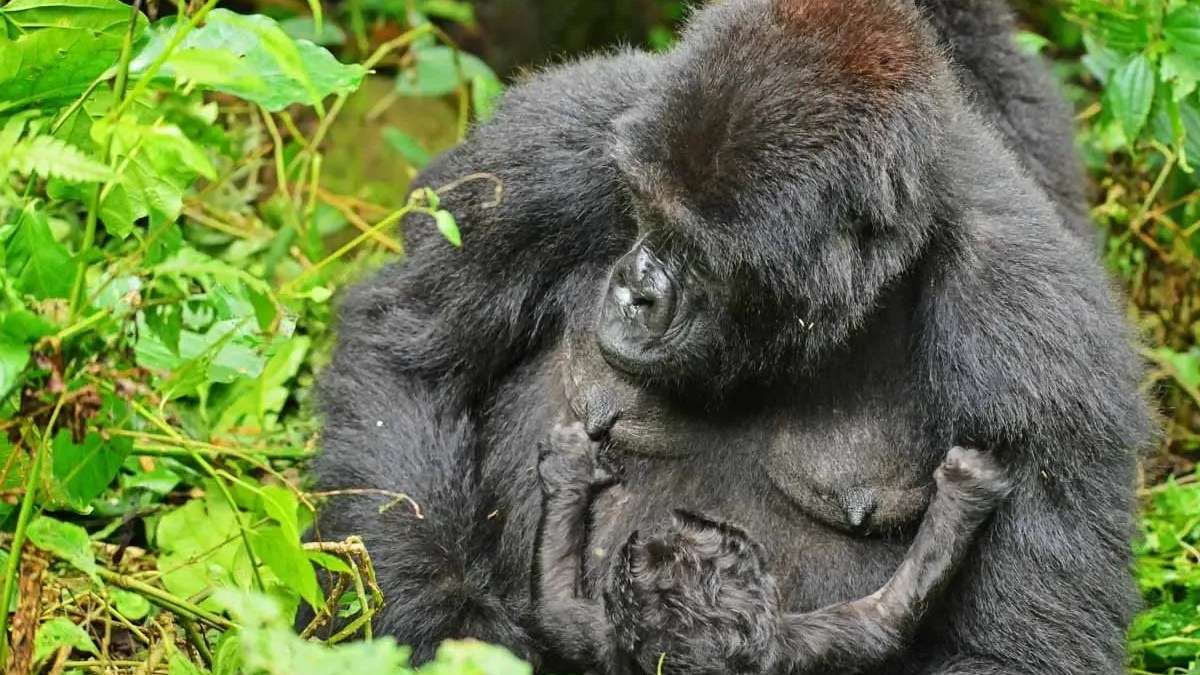
Yes. Seniors can absolutely go gorilla trekking, and there is no official maximum age limit for participating in gorilla trekking in Uganda or Rwanda. Every year, thousands of travelers over the age of 60 successfully trek through the rainforest to spend one unforgettable hour with endangered mountain gorillas in their natural habitat.
The most important factor is your overall health and mobility, not your age. We have welcomed guests in their late 60s, 70s, and even over 80 who completed their treks with the assistance of experienced park rangers, local porters, and, where necessary, specially designed gorilla sedan chairs. These support services allow many older travelers to enjoy an experience that they once thought was beyond their physical abilities.
Mountain gorilla trekking takes place in protected forests such as Bwindi Impenetrable National Park and Mgahinga Gorilla National Park in Uganda, as well as Volcanoes National Park in Rwanda. Because gorillas move freely through dense rainforest, no two treks are exactly alike. Some gorilla families may be found after a short walk lasting less than an hour, while others require several hours of hiking over steep, muddy, and uneven terrain.
Although the distance and difficulty vary from day to day, park authorities make every effort to allocate visitors to suitable gorilla groups whenever possible. During the morning briefing, rangers assess the fitness levels of visitors before assigning trekking groups. While conservation priorities and the daily movements of gorilla families always come first, older travelers who explain their mobility concerns may be assigned gorilla families that are generally known to require shorter or less demanding hikes. However, it is important to understand that no assignment can ever be guaranteed, as mountain gorillas are wild animals that move continuously through the forest.
This honest approach helps set realistic expectations while ensuring that every visitor has the opportunity to enjoy the experience safely.
Why Age Is Not the Biggest Challenge
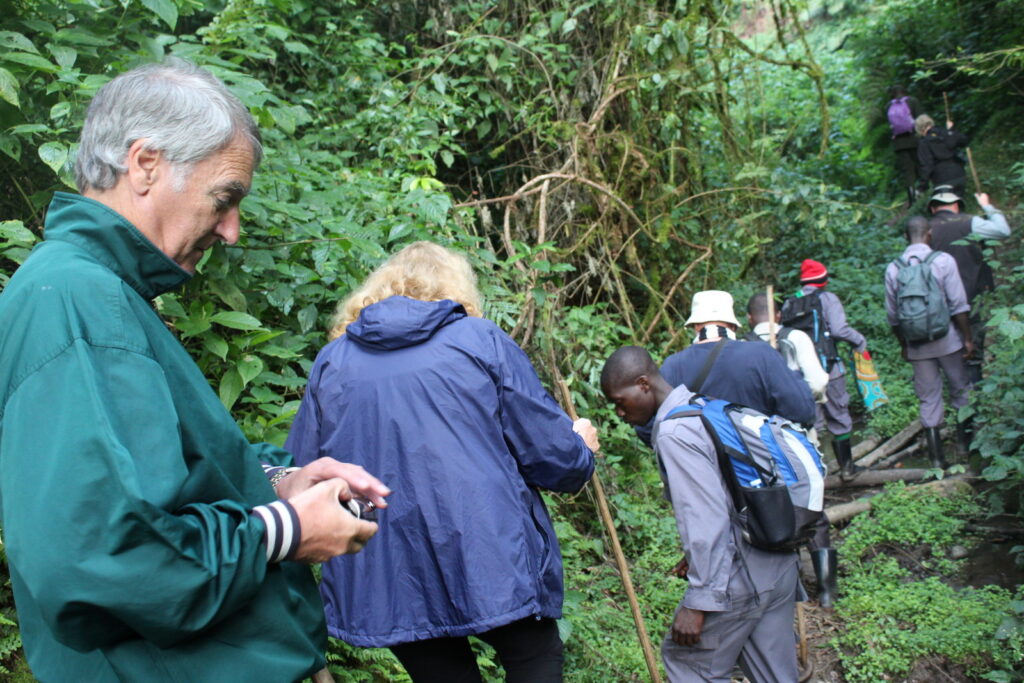
Many people assume that turning 60 or 70 automatically makes gorilla trekking impossible. In reality, we often see active retirees outperform much younger travelers who arrive without preparation. Regular walking, maintaining good cardiovascular health, and having reasonable balance are often more important than age itself.
Some of our senior guests spend months preparing by walking daily, climbing stairs, or participating in light fitness routines before traveling to Africa. Others remain active through gardening, golfing, swimming, or hiking at home. These everyday activities often provide an excellent foundation for gorilla trekking.
What matters most is being able to walk on uneven ground for several hours with regular breaks. You do not need to be an athlete, but you should be comfortable spending time outdoors in varying weather conditions.
How Rangers Help Senior Travelers
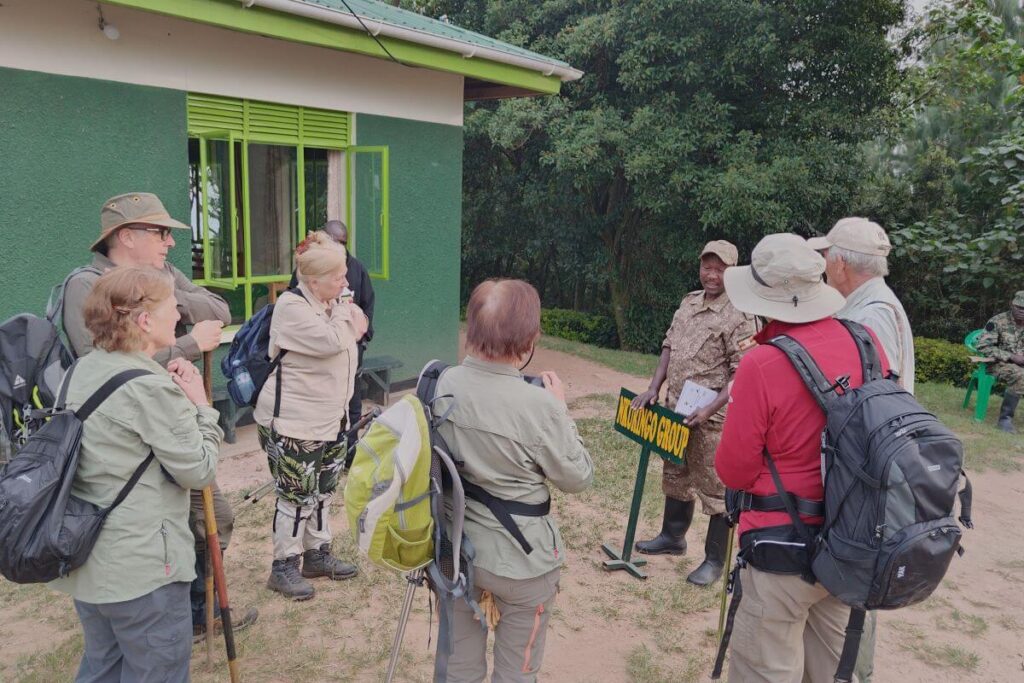
One aspect that many first-time visitors do not realize is the incredible support provided by Uganda Wildlife Authority (UWA) and Rwanda Development Board (RDB) rangers. Every gorilla trekking group is accompanied by highly trained guides who prioritize visitor safety while protecting the gorillas and their habitat.
Before setting off, rangers explain what to expect during the trek, demonstrate appropriate behavior around gorillas, and answer any questions. Along the trail, they regularly check on visitors, adjust the pace when necessary, and choose the safest available route through the forest.
For senior travelers, this support can make a significant difference. Rangers understand that some visitors need additional rest stops or slower walking speeds, and they work closely with porters to ensure everyone progresses comfortably whenever possible.
Additional Support Services for Older Travelers
One of the biggest advantages of booking with an experienced gorilla safari operator is access to additional support services that make trekking far more manageable.
For example, we often recommend hiring a local porter, even for travelers who consider themselves reasonably fit. A porter can carry your daypack, provide stability on steep sections, help you cross muddy areas, and offer encouragement throughout the trek. Besides improving your comfort, hiring a porter directly supports local communities living around the national parks.
For travelers with limited mobility, gorilla sedan chairs offer another excellent option. These specially designed stretchers are carried by trained teams through the forest, allowing visitors with knee problems, hip replacements, or other mobility challenges to reach the gorillas safely. While this service comes at an additional cost, it has made gorilla trekking possible for many guests who would otherwise have missed this extraordinary wildlife encounter.
Why Preparation Matters More Than Strength
The travelers who enjoy gorilla trekking the most are not necessarily the strongest or the fastest. They are usually the ones who prepare well, pace themselves, stay hydrated, and accept that the rainforest is unpredictable.
Weather conditions can change quickly. Rain may make trails muddy, while sunshine can increase humidity beneath the forest canopy. Some sections involve climbing, while others require descending slippery slopes or stepping over tree roots. Taking your time and listening to your guides helps make the experience safer and more enjoyable.
We also encourage our senior guests to arrive at least one day before their trek. Long international flights can leave you tired and dehydrated, and giving yourself time to rest before trekking allows your body to recover while reducing unnecessary fatigue on trekking day.
Our Experience Organizing Gorilla Trekking for Seniors
Over the years, we have had the privilege of organizing gorilla trekking adventures for hundreds of senior travelers from around the world. Each guest arrives with different concerns, some worry about steep trails, others about knee pain, and many simply wonder whether they are too old for the experience.
More often than not, those concerns disappear once the trek begins. With careful planning, experienced guides, supportive porters, and realistic expectations, many older travelers discover that gorilla trekking is not only achievable but also one of the most rewarding adventures of their lives.
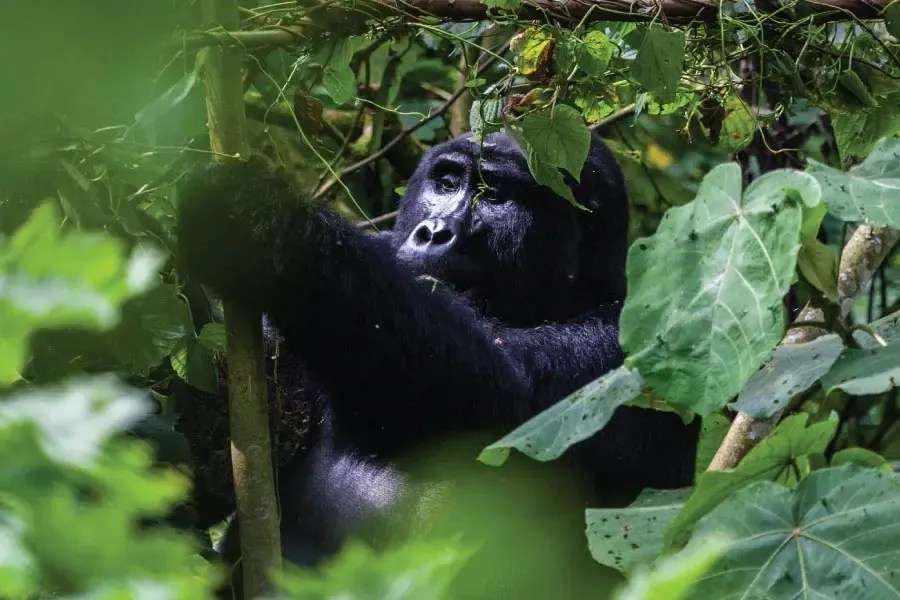
Seeing a family of endangered mountain gorillas emerge silently from the rainforest is an emotional experience that transcends age. The physical effort quickly fades into the background, replaced by the unforgettable memory of sharing a moment with one of humanity’s closest relatives in the wild.
Is There an Age Limit for Gorilla Trekking?
One of the first questions we receive from older travelers is whether they are “too old” to go gorilla trekking. The answer is reassuring: there is no official maximum age limit for gorilla trekking in Uganda or Rwanda. As long as you meet the minimum age requirement and are medically fit to participate, you can enjoy one of Africa’s most extraordinary wildlife experiences regardless of your age.
We’ve organized gorilla trekking safaris for guests in their 60s, 70s, and 80s, and many have completed their trek successfully with the right preparation and support. The decision to trek should be based on your overall health, mobility, and confidence, not simply the number of years you’ve lived.
Minimum Age Requirement
While there is no upper age limit, there is an official minimum age requirement of 15 years for gorilla trekking in both Uganda and Rwanda. This rule exists to protect both visitors and the endangered mountain gorillas.
Children under 15 may struggle to remain calm during close wildlife encounters, and younger immune systems can also pose a greater risk of transmitting illnesses to gorillas, which share approximately 98% of human DNA and are highly susceptible to human respiratory infections.
No Maximum Age Limit
Unlike many adventure activities, gorilla trekking has no official upper age restriction. Every day, park authorities assess visitors based on their physical condition rather than their age.
We’ve welcomed travelers celebrating retirement, milestone birthdays, anniversaries, and lifelong dreams of seeing mountain gorillas in the wild. Some have been avid hikers, while others simply maintained an active lifestyle through walking, gardening, golf, or swimming. Their success demonstrates that proper preparation often matters far more than age itself.
Should You Get Medical Clearance?
Although medical clearance is not mandatory, we strongly recommend consulting your doctor before booking your gorilla safari if you have any existing medical conditions.
This is particularly important if you have:
- Heart disease
- High blood pressure
- Diabetes
- Asthma or respiratory conditions
- Arthritis
- Knee or hip replacements
- Previous back injuries
- Mobility limitations
Your physician can assess whether you’re fit for several hours of walking over uneven terrain and may recommend adjustments to your medications or provide advice for traveling at higher elevations.
Being Honest About Your Fitness
When planning your safari, we always encourage our guests to be open about their fitness level. This isn’t about discouraging anyone from trekking, it’s about helping us recommend the most suitable itinerary, accommodation, and support services.
Knowing about previous surgeries, joint pain, balance issues, or limited endurance allows us to arrange practical solutions such as:
- Lodges close to the park headquarters
- Private transfers
- Porter assistance
- Walking sticks
- Gorilla sedan chair services where appropriate
The more information we have before your trip, the better we can help create a comfortable and enjoyable experience.
Can You Trek After Knee or Hip Replacement?
Many travelers assume that a knee or hip replacement automatically rules out gorilla trekking. In our experience, that isn’t always the case.
We’ve assisted guests who successfully completed their trek several months or years after joint replacement surgery. The key factors are your recovery, your doctor’s advice, and your ability to walk comfortably on uneven terrain.
For some travelers, hiring a porter provides enough additional stability to complete the trek confidently. Others choose a gorilla sedan chair to eliminate the physical demands.
Every situation is different, so it’s important to discuss your plans with both your healthcare provider and your safari consultant before booking.
Our Advice for Senior Travelers
We never encourage anyone to underestimate gorilla trekking, it is a genuine rainforest hike that can involve steep slopes, muddy trails, and changing weather conditions. However, we also believe that many travelers unnecessarily rule themselves out because of their age alone.
With realistic expectations, professional guidance, and the right support services, many older travelers discover that gorilla trekking is far more achievable than they imagined.
Our role is to help you prepare properly so that your focus remains on the unforgettable moment you meet a family of mountain gorillas, not on worrying about whether you’re capable of reaching them.
How Difficult Is Gorilla Trekking for Older Adults?
One of the biggest misconceptions about gorilla trekking is that every trek involves climbing steep mountains for hours without rest. In reality, the difficulty of gorilla trekking varies significantly from one day to the next.
Mountain gorillas are wild animals that move freely through the rainforest in search of food. Rangers locate each habituated gorilla family every morning before visitors arrive, meaning the distance you’ll walk depends entirely on where the gorillas have traveled overnight.
Some groups may be found within 30 to 60 minutes of leaving the trailhead, while others require four to six hours of hiking through dense forest before reaching them.
For senior travelers, understanding these variations helps set realistic expectations and reduces unnecessary anxiety before the trek.
What Makes Gorilla Trekking Challenging?
Several factors contribute to the physical demands of gorilla trekking.
Steep Terrain
Both Uganda and Rwanda feature mountainous landscapes with steep ascents and descents. Trails often climb through thick rainforest, bamboo forests, and volcanic slopes.
While some sections are relatively gentle, others require careful footing, particularly after rain.
Muddy Forest Trails
Rainfall is common throughout the year, especially in Bwindi Impenetrable National Park. Wet conditions can make trails slippery and uneven.
This is why we always recommend waterproof hiking boots with good ankle support and encourage senior travelers to hire a porter for additional stability.
Altitude
Gorilla trekking takes place at elevations ranging from approximately 1,200 to over 2,600 meters (3,900–8,500 feet) above sea level.
Most visitors adapt well, but some may notice mild shortness of breath, particularly during uphill sections.
Taking your time, walking at a comfortable pace, and staying hydrated usually makes a significant difference.
Humidity
The rainforest environment is naturally humid throughout much of the year.
Even relatively short hikes can feel more demanding because your body works harder to regulate its temperature.
Lightweight, moisture-wicking clothing helps keep you comfortable during the trek.
Easy Gorilla Treks
Some gorilla families remain relatively close to established trails or park boundaries, resulting in shorter hikes with gentler terrain.
These treks are generally ideal for:
- Travelers over 70
- Visitors with mild mobility concerns
- Guests recovering from previous injuries
- First-time hikers
- Seniors who prefer shorter walking distances
Although no trek is guaranteed to be easy, these assignments often provide a more relaxed experience when available.
Moderate Gorilla Treks
Moderate treks typically involve two to four hours of walking with a combination of flat sections, gradual climbs, and occasional steep areas.
Most reasonably active travelers over 60 find these treks manageable, particularly when using walking poles and porter assistance.
This is the type of trek many of our senior guests complete successfully.
Challenging Gorilla Treks
Some gorilla families travel deeper into the forest or higher into mountainous terrain.
These treks may involve:
- Long uphill climbs
- Dense vegetation
- River crossings
- Steep descents
- Thick mud
- Hiking for five to seven hours
While experienced hikers often enjoy these challenging routes, they may not be the best choice for travelers with limited mobility or significant health concerns.
How Rangers Assess Trekking Groups
Every morning, Uganda Wildlife Authority (UWA) and Rwanda Development Board (RDB) rangers conduct a briefing before assigning visitors to gorilla families.
During this process, they consider factors such as:
- Group size
- Fitness levels
- Visitor ages
- Mobility limitations
- Current gorilla locations
If you have concerns about your fitness, let your guide know before the briefing begins. While allocations depend on conservation priorities and gorilla movements, rangers often try to match visitors with suitable groups whenever possible.
It’s important to remember that this is a request rather than a guarantee, as the welfare of the gorillas always comes first.
We Help You Prepare for Success
From our experience organizing gorilla safaris, the travelers who enjoy their trek the most are those who arrive well prepared and understand what to expect.
Before your safari, we’ll advise you on the most suitable trekking destination, recommend accommodations that reduce unnecessary travel on trekking morning, explain available mobility support services, and help you plan a realistic itinerary that matches your fitness level.
Our goal isn’t simply to book a permit, it’s to ensure that your gorilla trekking adventure is safe, comfortable, and memorable from start to finish.
Best Gorilla Trekking Sectors for Seniors
Choosing the right trekking location can make a significant difference for older travelers. While every gorilla trek is a wilderness experience and conditions can change daily, some trekking sectors are generally considered more suitable for senior travelers because of their accessibility, accommodation options, terrain, and proximity to park headquarters.
When we help seniors plan a gorilla safari, we do not simply look at the destination. We consider the complete experience: how far the lodge is from the briefing point, the expected trekking conditions, transfer times, altitude, available support services, and the traveler’s comfort level.
It is important to remember that gorilla families move naturally through the forest, meaning no operator can guarantee a specific trekking distance or gorilla location. However, experienced safari planning can greatly improve the chances of having a comfortable and enjoyable experience.
Below are some of the best gorilla trekking sectors and destinations we commonly recommend for older travelers.
Buhoma Gorilla Trekking Sector (Uganda)
Buhoma is one of the most famous and established gorilla trekking sectors in Bwindi Impenetrable National Park. It was the first sector in Uganda where gorilla tourism began, and today it remains one of the most popular choices for travelers, including seniors.
One of the biggest advantages of Buhoma for older travelers is its excellent tourism infrastructure. The sector has a wide selection of comfortable lodges, many of which are located close to the park headquarters where trekking briefings take place. This reduces early morning driving time and allows guests to begin their adventure feeling relaxed rather than rushed.
The surrounding terrain can still be challenging because Bwindi is a natural rainforest environment. Trails may include uneven paths, forest roots, slopes, and muddy sections, especially during rainy seasons. However, Buhoma often offers a more manageable experience compared with some of the steeper sectors of Bwindi.
For senior travelers, we often recommend:
- Staying close to the Buhoma briefing point.
- Hiring a porter for additional support.
- Requesting a shorter trekking option during registration.
- Considering a sedan chair if mobility is limited.
- Allowing extra recovery time after arrival.
Best suited for:
- Seniors trekking for the first time.
- Travelers who want reliable infrastructure.
- Guests who prefer staying close to park facilities.
- Older visitors who want comfort without sacrificing the rainforest experience.
Ruhija Gorilla Trekking Sector (Uganda)
Ruhija is another excellent option for gorilla trekking for older adults. Located on the eastern side of Bwindi Impenetrable National Park, Ruhija is known for beautiful forest scenery, fewer crowds, and a quieter trekking atmosphere.
Many senior travelers appreciate Ruhija because the environment feels peaceful and less busy. The sector provides an authentic rainforest experience where visitors can enjoy the sounds of birds, dense vegetation, and the feeling of being deep inside one of Africa’s most important conservation areas.
The trekking difficulty in Ruhija varies. Some gorilla families may be relatively accessible, while others may require longer walks through hilly terrain. Because the sector sits at a higher elevation, travelers should also consider the effects of altitude and take time to acclimatize.
When planning Ruhija gorilla trekking for seniors, we usually recommend choosing accommodation carefully. Staying nearby helps avoid long early-morning transfers and gives travelers more energy for the trek itself.
Best suited for:
- Active seniors who enjoy nature and quieter experiences.
- Travelers comfortable with moderate hiking.
- Guests looking for fewer crowds.
- Older adventurers who want a deeper wilderness experience.
Rushaga Gorilla Trekking Sector (Uganda)
Rushaga, located in the southern part of Bwindi, has become increasingly popular among international visitors because it offers excellent gorilla trekking opportunities and is also home to the gorilla habituation experience.
For seniors, Rushaga can be a good choice because there are several accommodation options nearby and experienced local support teams available to assist visitors. The sector also provides access to habituated gorilla families, allowing travelers to experience Uganda’s conservation efforts in a meaningful way.
However, terrain conditions can vary. Some trails involve steep sections, and the rainforest environment means visitors should prepare for changing weather conditions.
For older travelers interested in Rushaga, we focus on proper preparation:
- Selecting accommodation close to the sector.
- Discussing mobility requirements before arrival.
- Organizing porters in advance.
- Considering trekking alternatives based on fitness level.
Best suited for:
- Seniors seeking a less crowded experience.
- Travelers interested in conservation-focused adventures.
- Older visitors who want flexibility in planning.
Nkuringo Gorilla Trekking Sector (Uganda)
Nkuringo is one of the most scenic gorilla trekking sectors in Uganda, offering breathtaking views of the Virunga Mountains and surrounding landscapes. However, it is also considered one of the more physically demanding trekking areas.
The sector is known for steep terrain and challenging trails, which means it may not be the first recommendation for travelers with limited mobility. However, we have also seen many fit seniors successfully complete Nkuringo treks with preparation, porter assistance, and a positive mindset.
For travelers over 60, 70, or even 80 who are considering Nkuringo, we recommend an honest fitness assessment before booking. The experience can be incredibly rewarding, but it requires realistic preparation.
Best suited for:
- Physically active seniors.
- Experienced hikers.
- Travelers prioritizing scenery and adventure.
- Guests comfortable with more demanding terrain.
Volcanoes National Park (Rwanda)
Rwanda’s Volcanoes National Park is often considered one of the most accessible destinations for senior gorilla travelers because of its excellent infrastructure, smooth logistics, and proximity to Kigali.
One major advantage is the short transfer time from Kigali International Airport. After landing, many travelers can reach their lodge in approximately two to three hours, reducing travel fatigue compared with longer road journeys required for some Uganda itineraries.
Rwanda also has many high-quality luxury lodges, excellent roads, and well-organized tourism services. For seniors who prioritize comfort, convenience, and premium accommodation, Rwanda can be an attractive choice.
However, accessibility does not mean the trek itself is always easy. Volcanoes National Park is located at high altitude, and some gorilla groups may require significant walking depending on where they are located that day.
When planning Rwanda gorilla trekking for seniors, we focus on:
- Selecting the right gorilla trekking group, where possible.
- Booking accommodation near the park.
- Arriving early to rest before trekking.
- Organizing walking support if needed.
Best suited for:
- Seniors looking for smoother logistics.
- Luxury travelers.
- Visitors with limited time.
- Travelers who prefer shorter transfers.
Uganda vs Rwanda: Which Is Better for Senior Travelers?
Both Uganda and Rwanda offer unforgettable gorilla trekking experiences. The best choice depends on your priorities, fitness level, budget, and travel style.
For many senior travelers, the decision comes down to priorities:
- Choose Uganda if you want a more affordable, diverse, and immersive rainforest experience.
- Choose Rwanda if you prefer easier logistics, luxury accommodation, and shorter transfers.
There is no single “best” destination for every senior traveler. We help match each guest with the option that fits their comfort level, expectations, and adventure goals.
What Is a Gorilla Sedan Chair?
A gorilla sedan chair is one of the most important accessibility services available for travelers who want to experience gorilla trekking despite mobility challenges.
Many people search for “sedan chair gorilla trekking” because they assume limited mobility automatically means they must miss out on seeing mountain gorillas. This is not true.
A gorilla sedan chair is a specially designed lightweight seat carried by a trained local team. It allows guests who may struggle with long walks, steep slopes, knee problems, hip replacements, or other mobility limitations to access the forest safely and comfortably.
Rather than being carried throughout the entire trek unnecessarily, many visitors use the sedan chair only for the more difficult sections of the trail.
How Does a Gorilla Sedan Chair Work?
On trekking day, a trained team of local carriers meets you before entering the forest. The chair is designed to provide stability and comfort while allowing the team to navigate rainforest conditions.
Depending on the trail and your needs, the team may:
- Carry you through steep sections.
- Assist across muddy areas.
- Help navigate uneven terrain.
- Allow you to walk whenever you feel comfortable.
- Provide support throughout challenging sections.
The goal is not to remove the adventure but to make the experience possible. Many guests tell us that using a sedan chair gave them confidence because they knew support was available whenever they needed it.
Who Should Consider a Gorilla Sedan Chair?
A sedan chair may be a good option for:
- Travelers over 70 or 80 concerned about endurance.
- Guests with knee replacements.
- Visitors with hip replacements.
- Travelers recovering from injuries.
- Guests with limited balance.
- Anyone worried about several hours of walking.
Using a sedan chair does not mean you are unable to enjoy adventure. Many active seniors choose this option simply because they want to protect their energy for the most important moment: sitting quietly with a mountain gorilla family in the forest.
How Much Does a Gorilla Sedan Chair Cost?
The cost of a gorilla sedan chair varies depending on the location, trekking distance, and number of helpers required.
Because this service involves a team of local workers, pricing depends on the specific arrangements needed for your trek. We recommend discussing your requirements early so everything can be organized before arrival.
The cost should be viewed not only as a comfort service but also as a way to directly support local employment around gorilla conservation areas.
How Do You Book a Gorilla Sedan Chair?
We recommend arranging a sedan chair before your trekking day rather than waiting until you arrive.
When planning senior gorilla trekking, we help guests organize:
- Sedan chair availability.
- Local support teams.
- Suitable trekking sectors.
- Nearby accommodation.
- Transportation arrangements.
Advance planning ensures that your trekking day is comfortable and stress-free.
Should Senior Travelers Hire a Porter for Gorilla Trekking?
Our answer is almost always yes.
Even travelers who consider themselves fit often benefit from hiring a porter. A porter is not only someone who carries your backpack, but they are also an important part of your trekking support team.
Many senior travelers tell us that hiring a porter was one of the best decisions they made during their gorilla safari.
Benefits of Hiring a Gorilla Trekking Porter, can help with:
- Carrying Your Backpack
- Instead of carrying water, cameras, snacks, rain jackets, and personal items, you can focus your energy on walking and enjoying the rainforest.
- Providing Stability
- Forest trails can become slippery after rain. Porters are experienced navigating these conditions and can offer a helping hand when needed.
- Supporting Your Pace
- Porters understand that older travelers may need more frequent breaks.
- They provide encouragement and practical assistance throughout the trek.
- Supporting Local Communities
Hiring a porter directly contributes to families living near gorilla habitats. Many porters are former farmers or community members who now earn income through conservation tourism.
How Much Does a Gorilla Trekking Porter Cost?
Porter fees vary depending on the destination and trekking conditions, but the service is generally affordable compared with the overall cost of an international gorilla safari.
We encourage travelers to budget for a porter because the benefits extend beyond convenience. Your support helps local communities become active partners in protecting mountain gorillas and their rainforest home.
Tipping is also appreciated when you feel your porter provided excellent service. Many visitors choose to give a gratuity at the end of the trek as a personal thank-you.
Our Advice for Senior Gorilla Travelers
After years of organizing gorilla safaris, we have noticed one common pattern: travelers who accept support services usually enjoy their experience more.
A porter does not make your adventure less authentic. A sedan chair does not reduce the achievement. These services exist because conservation tourism should be accessible to people of different ages and abilities.
The goal is simple: to help you reach the rainforest, meet the gorillas, and create a memory that lasts a lifetime.
For senior travelers planning a gorilla safari, the right preparation and support can transform a challenging journey into one of the most meaningful experiences you will ever have.
How Fit Do You Need to Be for Gorilla Trekking?
One of the first questions we receive from older travelers is, How fit do I need to be for gorilla trekking? The honest answer is that you do not need to be an athlete or an experienced mountaineer. However, you should have a reasonable level of mobility, endurance, and balance to enjoy the experience safely and comfortably.
Gorilla trekking is not a race. The pace is generally slow, with plenty of opportunities to stop, rest, and admire the rainforest along the way. Rangers understand that every trekking group includes people of different ages and fitness levels, and they adjust the pace whenever possible. Our role is to help you prepare realistically so that you arrive feeling confident rather than anxious.
If you can comfortably walk for several hours on uneven terrain, climb a few flights of stairs without difficulty, and remain active in your daily life, you are already building the foundation needed for a successful trek. Even if you are not currently active, a few weeks of preparation can significantly improve your comfort and confidence.
What Gorilla Trekking Is Physically Like
Unlike hiking on paved trails or well-maintained mountain paths, gorilla trekking takes place in dense tropical rainforest where the terrain constantly changes. Depending on where the gorilla family is located, you may walk through bamboo forests, cross small streams, climb gentle hills, descend muddy slopes, or navigate narrow footpaths surrounded by thick vegetation.
The duration of a trek can range from 30 minutes to over six hours, depending on the gorillas’ movements on that particular day. Some groups are found relatively close to the park headquarters, while others travel deeper into the forest overnight.
The altitude also adds to the challenge. Bwindi Impenetrable National Park ranges between approximately 1,160 and 2,607 meters (3,800–8,550 feet) above sea level, while Volcanoes National Park sits at even higher elevations. Although most visitors adapt well, the thinner air can make climbing feel more demanding than expected, especially if you have recently arrived after a long international flight.
Humidity, occasional rain, and uneven footing are often more challenging than the distance itself. That is why preparing your body before your trip can make a remarkable difference.
A Simple Four-Week Fitness Plan for Senior Travelers
You do not need expensive gym memberships or intensive training programs to prepare for gorilla trekking. We encourage our guests to focus on improving endurance, strength, flexibility, and balance through simple daily activities that closely resemble the demands of trekking.
Week 1: Build Your Walking Routine
During the first week, aim to establish a consistent walking habit.
Walk for 20 to 30 minutes at a comfortable pace at least five days during the week. If you already walk regularly, gradually increase your distance or include gentle hills to simulate the changing terrain you will encounter in the rainforest.
Take the stairs whenever possible instead of using elevators, and finish each walk with light stretching to improve flexibility in your calves, hamstrings, hips, and lower back.
Hydration should also become part of your routine. Drinking enough water each day helps prepare your body for trekking in warm and humid conditions.
Week 2: Increase Endurance and Leg Strength
Once walking becomes comfortable, increase your sessions to 35 to 45 minutes.
Look for parks or trails with gentle inclines, or use staircases to strengthen your legs. Climbing uphill engages many of the same muscles used during gorilla trekking, while descending helps improve stability and balance.
Simple strength exercises such as bodyweight squats, step-ups onto a low platform, seated leg raises, and calf raises help build the muscles needed for uneven trails.
Do not worry about speed. Focus on steady movement and proper posture.
Week 3: Improve Balance and Stability
Balance becomes increasingly important as we age, especially when walking on muddy or uneven ground.
This week, continue your walking routine while adding simple balance exercises such as standing on one leg, heel-to-toe walking, or gentle yoga designed for seniors.
If your doctor approves, you can also carry a light backpack during your walks to simulate the weight of the small daypack you will carry during your trek. Avoid making the backpack too heavy, your goal is simply to become comfortable walking with extra weight.
If you plan to use trekking poles during your gorilla trek, begin practicing with them now. Learning proper technique before your trip will make them far more effective on slippery trails.
Week 4: Simulate Trekking Conditions
During the final week before departure, combine everything you have practiced.
Take one or two longer walks lasting 60 to 90 minutes, preferably on natural trails with uneven ground if available. Include short uphill and downhill sections and wear the same hiking boots you intend to use during your gorilla trek.
This is also the ideal time to test your rain jacket, backpack, moisture-wicking clothing, and socks. Identifying any discomfort before your trip helps prevent problems in the rainforest.
Finally, avoid overtraining. Your goal during the last few days before departure is to stay active while allowing your body to recover.
Exercises That Benefit Older Travelers
While walking remains the most important form of preparation, several additional exercises can improve your trekking experience.
Strength training helps support your knees and hips when climbing or descending steep trails. Balance exercises reduce the risk of slipping on muddy ground, while stretching improves flexibility and makes walking more comfortable.
Activities that many of our senior guests find helpful include:
- Walking on varied terrain
- Gentle hiking
- Swimming
- Cycling
- Yoga
- Pilates
- Tai Chi
- Water aerobics
- Resistance band exercises
These low-impact activities improve endurance without placing excessive stress on the joints.
Listen to Your Body
Preparing for gorilla trekking is not about pushing yourself beyond your limits. If you experience pain, dizziness, or unusual fatigue during training, consult your healthcare provider before increasing your activity level.
Many of our guests have completed successful gorilla treks after knee replacements, hip replacements, or while managing chronic medical conditions. The key is understanding your personal limitations, following your doctor’s advice, and communicating openly with your safari operator before your trip.
When we know your mobility needs in advance, we can recommend suitable lodges, arrange porter assistance, discuss sedan chair availability if appropriate, and help you plan an itinerary that minimizes unnecessary physical strain.
Small Decisions That Make a Big Difference
Over the years, we have found that simple choices often have the greatest impact on our guests’ comfort.
Arriving one day before your trek allows your body to recover from international travel and adjust to the altitude. Choosing accommodation close to the park headquarters reduces early-morning travel, leaving you feeling more rested before the briefing begins.
Hiring a porter is another decision that many travelers initially hesitate to make. Almost without exception, they tell us afterward that it was one of the best investments of their trip. Besides carrying your backpack, porters provide a reassuring hand on slippery slopes, assist with stream crossings, and help you conserve energy for the unforgettable moment when you finally stand face-to-face with a family of mountain gorillas.
Fitness Is About Confidence, Not Perfection
Perhaps the most important thing we want our senior travelers to remember is that gorilla trekking is not a competition. Every visitor moves at a different pace, and the goal is not to reach the gorillas first but to enjoy every step of the journey.
With a little preparation, realistic expectations, and the support of experienced guides, rangers, and porters, many older travelers discover that gorilla trekking is far more achievable than they ever imagined. We have seen guests in their 60s, 70s, and beyond return from the forest smiling, emotional, and proud of what they accomplished. The physical effort fades quickly, but the memory of standing just a few meters away from wild mountain gorillas lasts a lifetime.
What Happens on Gorilla Trekking Day? A Step-by-Step Timeline for Senior Travelers
One of the biggest concerns we hear from older travelers is not just whether they can complete the trek, but what the entire day actually looks like. Understanding the schedule helps you prepare mentally and physically while reducing any anxiety about the unknown.
Although every gorilla trekking experience is slightly different depending on the park, weather conditions, and the location of your assigned gorilla family, the overall routine follows a similar pattern in both Uganda and Rwanda.
Knowing what to expect allows you to pace yourself, conserve your energy, and focus on enjoying one of the world’s most remarkable wildlife encounters.
5:30 AM – Wake Up and Enjoy an Early Breakfast
Your day starts early, usually between 5:30 and 6:00 AM, depending on how close your lodge is to the park headquarters.
We always recommend choosing accommodation near the briefing point whenever possible. This reduces unnecessary morning travel, allows you to enjoy a relaxed breakfast, and gives you extra time to prepare without feeling rushed.
A nutritious breakfast is essential because trekking can last anywhere from one to eight hours. Most lodges serve a hearty meal that includes eggs, fresh fruit, cereal, toast, juice, tea, and coffee. Eat enough to fuel your body, but avoid overeating, especially if you are not accustomed to hiking after a large meal.
Before leaving your lodge, double-check that you have packed your essentials:
- Gorilla trekking permit or identification
- Passport (if required by your guide)
- Waterproof hiking boots
- Lightweight rain jacket
- Hat and sunscreen
- Gardening or trekking gloves
- Walking poles
- Drinking water
- Packed lunch and snacks
- Camera (without flash)
- Personal medications
- Small backpack
If you have hired a porter in advance, your guide will explain where you will meet them after the briefing.
7:00 AM, Registration and Ranger Briefing
Most gorilla trekking briefings begin around 7:00 AM at the respective park headquarters.
This is one of the most important parts of the day because the Uganda Wildlife Authority (UWA) or Rwanda Development Board (RDB) rangers explain the trekking rules that protect both visitors and the endangered mountain gorillas.
During the briefing, you will learn about:
- Gorilla behavior
- Safety procedures
- Photography guidelines
- Maintaining a minimum seven-meter distance
- What to do if a gorilla approaches you
- Why is flash photography prohibited
- Conservation rules
- Emergency procedures
The rangers also introduce your trekking team and explain approximately where your assigned gorilla family was last seen.
Fitness Assessment and Gorilla Group Allocation
Many senior travelers ask us whether they can request an easier trek.
The answer is yes, you can certainly ask, but there are no guarantees.
Before assigning groups, rangers observe the overall fitness levels of visitors. They consider factors such as age, mobility concerns, previous hiking experience, and any medical conditions you disclose.
Whenever possible, they may assign older travelers to gorilla families that have recently been located closer to the trailhead or are generally known for requiring shorter hikes.
However, mountain gorillas are completely wild animals. They move freely through the forest every day, and conservation priorities always take precedence over visitor preferences.
This is why we encourage our guests to remain flexible and trust the expertise of the rangers, who make allocations based on the latest tracking information.
8:00 AM, Begin the Trek
After the briefing, your guide transports you, or you may walk a short distance, to the trailhead where your adventure officially begins.
The first part of the trek often passes through farmland surrounding the national park before entering dense tropical rainforest.
Immediately, you’ll notice the dramatic change in scenery.
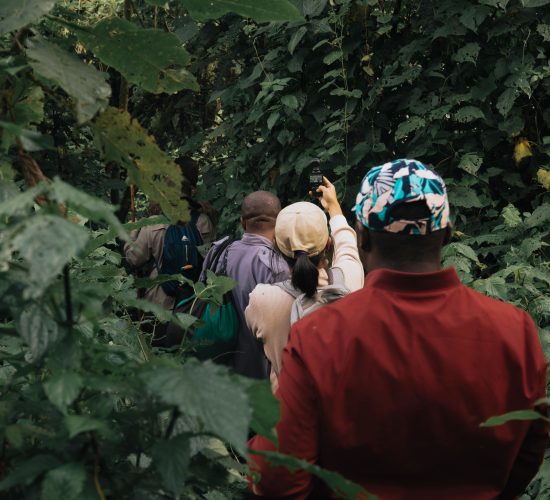
Towering trees filter the sunlight overhead, vines drape across the forest canopy, colorful birds call from above, and butterflies drift through shafts of light breaking between the leaves.
Unlike traditional hikes where the destination is fixed, gorilla trekking is an active wildlife search.
Professional trackers leave before dawn to locate the gorilla families and communicate their position to the ranger teams. Even with this information, reaching the gorillas may require navigating steep slopes, muddy paths, dense vegetation, or narrow forest trails.
Walking at Your Own Pace
One of the biggest misconceptions is that everyone must keep the same pace.
In reality, experienced rangers understand that trekking groups include people with different fitness levels.
We always encourage our senior travelers to walk comfortably rather than trying to keep up with faster hikers.
There is absolutely nothing wrong with requesting a short break.
The guides are patient, supportive, and accustomed to helping visitors of all ages.
Hiring a porter makes an enormous difference here. Besides carrying your backpack, they often offer a helping hand over slippery rocks, muddy sections, fallen logs, and steep inclines.
Many of our older guests tell us that hiring a porter was one of the best decisions they made.
Reaching the Gorilla Family
There is no better moment than hearing your ranger quietly whisper,
“The gorillas are just ahead.”
At this point, everyone stops briefly while the ranger reminds the group of the viewing rules.
Backpacks are usually left behind with the porters a safe distance away, before you slowly approach the gorillas.
The excitement is difficult to describe. Within moments, you may find yourself standing just meters away from a massive silverback peacefully feeding on bamboo shoots while playful juveniles tumble through the vegetation nearby.
For many travelers, this becomes one of the most emotional wildlife experiences of their lives.
The One-Hour Gorilla Encounter
Visitors are permitted to spend one unforgettable hour with the gorilla family.
Although sixty minutes may sound brief, the experience feels surprisingly complete.
During this time, you will watch the gorillas feed, groom one another, rest, communicate through soft vocalizations, and care for their young.
Every encounter is unique.
Some gorillas ignore visitors completely, continuing their daily routines.
Others display remarkable curiosity, occasionally walking nearby while the rangers calmly monitor every interaction.
This extraordinary hour provides exceptional opportunities for photography, wildlife observation, and simply appreciating the privilege of sharing space with one of our closest relatives in the animal kingdom.
Returning to the Trailhead
After your hour with the gorillas ends, the ranger signals that it is time to begin the return journey.
Many visitors are surprised to discover that the return hike often feels easier because the excitement and anticipation have disappeared.
Depending on where the gorillas were located, the return walk may take anywhere from one to four hours.
- Take your time.
- Drink plenty of water.
- Enjoy the rainforest scenery.
- Celebrate what you have just experienced.
Your porter and guide will continue assisting you until you reach the trailhead.
Afternoon, Certificates and Celebration
Upon returning to the park headquarters, most visitors receive an official Gorilla Trekking Certificate recognizing their participation in this extraordinary conservation experience.
This is also an excellent opportunity to thank your ranger and porter.
While tipping is voluntary, it is greatly appreciated and directly supports the dedicated individuals who work tirelessly to protect mountain gorillas while ensuring visitors have a safe and memorable experience.
Your guide will then transfer you back to your lodge for a well-earned rest.
Many travelers spend the evening sharing photographs, reflecting on the day’s adventure, and enjoying a relaxing dinner overlooking the rainforest.
Our Advice for Senior Travelers
After organizing countless gorilla safaris for guests in their 60s, 70s, and beyond, we’ve found that the most enjoyable trekking days begin with realistic expectations rather than unnecessary worry.
- You do not need to rush.
- You do not need to compete with younger hikers.
You simply need to move at your own pace, stay hydrated, listen to your ranger, and appreciate every step of the journey.
The forest has its own rhythm, and the experience is about much more than reaching the gorillas. Along the way, you’ll discover ancient trees, colorful birds, butterflies, and breathtaking rainforest scenery that many visitors remember just as vividly as the gorillas themselves.
When you finally stand face-to-face with a wild mountain gorilla family, every early morning start, muddy trail, and uphill climb becomes part of a story you’ll treasure for the rest of your life.
Can Rangers Assign an Easier Gorilla Family?
This is one of the most frequently asked questions we receive from senior travelers, and it’s understandable. If you’re in your 60s, 70s, or 80s, or if you have limited mobility, you naturally want to know whether you can be matched with a gorilla family that requires a shorter or less demanding trek.
The honest answer is yes, you can request an easier gorilla trekking group, but it can never be guaranteed.
Each morning, Uganda Wildlife Authority (UWA) and Rwanda Development Board (RDB) rangers assign visitors to specific gorilla families based on several factors, including the previous day’s location of each gorilla group, current tracking reports, group size, conservation requirements, and the overall fitness of visitors.
When we arrange gorilla safaris for senior travelers, we always notify park authorities in advance if a guest has mobility concerns or would benefit from a less strenuous trek. During the morning briefing, we also encourage our guests to speak openly with the rangers about any physical limitations.
Whenever possible, rangers try to allocate older visitors to gorilla families that are generally found closer to the trailhead or in areas with gentler terrain. However, because mountain gorillas are wild animals that roam freely through the rainforest every day, their exact location cannot be predicted.
A gorilla family that was only a 45-minute walk away yesterday could move several kilometers overnight in search of fresh vegetation. Likewise, a family known for longer hikes may occasionally be found surprisingly close to the starting point.
For this reason, no safari company can honestly promise an easy trek.
We believe it’s far better to set realistic expectations than make guarantees that depend on wildlife behavior.
If you have significant mobility challenges, a gorilla sedan chair remains the best option. This specialized service allows trained porters to carry you safely through the forest while ensuring you can still enjoy a close encounter with the gorillas.
Our experience has shown that a combination of honest communication, realistic planning, experienced guides, and a positive attitude gives senior travelers the best chance of enjoying a safe, comfortable, and unforgettable gorilla trekking experience.
Common Mistakes Senior Travelers Make
Gorilla trekking is an unforgettable adventure, but it is also physically and mentally demanding. Over the years, we have helped hundreds of travelers in their 60s, 70s, and beyond prepare for this once-in-a-lifetime experience. While most complete their trek successfully, we’ve noticed that the challenges seniors face are rarely caused by age alone. More often, they stem from avoidable planning mistakes.
By understanding these common pitfalls before you travel, you can enjoy a safer, more comfortable, and far more rewarding gorilla trekking experience.
Gorilla Trekking for Seniors
1. Underestimating the Physical Demands
One of the biggest misconceptions about gorilla trekking is that it is simply a walk through the forest. In reality, mountain gorillas live in dense rainforest with constantly changing terrain. Depending on where the gorilla family is located that day, your trek could last anywhere from 30 minutes to over six hours.
The trails may include:
- Steep uphill and downhill sections
- Thick vegetation
- Muddy, slippery paths
- Uneven rocks and exposed tree roots
- High humidity and changing weather
We’ve found that travelers who assume the trek will be easy often struggle more than those who arrive with realistic expectations. You don’t need to be an experienced hiker, but preparing your body for walking on uneven ground makes a significant difference.
Our advice: Begin walking regularly at least four weeks before your trip. Include hills, stairs, and balance exercises in your routine to improve your confidence on natural trails.
2. Waiting Until the Last Minute to Prepare
Many travelers spend months planning flights, accommodation, and permits, but forget to prepare physically until just before departure.
A little preparation goes a long way. Even gentle daily walks can improve stamina, reduce muscle fatigue, and increase confidence on trekking day.
We encourage our senior guests to focus on:
- Walking 30–60 minutes several times each week
- Climbing stairs where possible
- Stretching leg and hip muscles
- Improving balance and flexibility
- Staying well hydrated
Preparing gradually is much more effective than trying to “train hard” a few days before your safari.
3. Wearing Brand-New Hiking Boots
This is one of the most common mistakes we see.
Many travelers purchase expensive hiking boots specifically for gorilla trekking, but wear them for the very first time in Uganda or Rwanda. New boots often cause painful blisters, pressure points, and sore feet, problems that become much worse on muddy forest trails.
Instead, wear your boots during your preparation walks at home. By the time you arrive for your safari, they should feel comfortable and fully broken in.
If you’re replacing older footwear, give yourself several weeks to wear your new boots before traveling.
4. Not Hiring a Porter
Some visitors assume porters are only necessary for people with mobility challenges. We strongly disagree.
Even our younger guests frequently hire porters because the service provides practical assistance while supporting local communities.
A porter can:
- Carry your backpack
- Offer a helping hand on steep slopes
- Assist across muddy sections
- Help maintain your balance
- Reduce physical fatigue
- Allow you to focus on enjoying the experience
For senior travelers, hiring a porter often transforms the entire trek from physically stressful to comfortably manageable.
Perhaps even more importantly, porter fees directly benefit families living around the national parks, creating sustainable employment through tourism.
Our recommendation is simple: hire a porter, you’ll almost certainly be glad you did.
5. Carrying Too Much
It’s natural to want to be prepared for every situation, but an overloaded backpack quickly becomes exhausting.
We’ve seen travelers bring:
- Multiple camera lenses
- Large water bottles
- Heavy jackets
- Unnecessary electronics
- Extra clothing they never use
Instead, pack only the essentials.
A lightweight daypack should include:
- Drinking water
- Rain jacket
- Camera
- Personal medication
- Light snacks
- Sunscreen
- Passport copy if required
Anything else usually becomes unnecessary weight.
6. Ignoring Existing Medical Conditions
Many seniors manage conditions such as:
- High blood pressure
- Diabetes
- Arthritis
- Knee replacements
- Hip replacements
- Asthma
- Heart disease
Having these conditions does not automatically prevent you from trekking gorillas, but discussing your plans with your healthcare provider before traveling is extremely important.
Bring enough prescription medication for your entire trip, along with copies of prescriptions in case of emergencies.
We also recommend purchasing comprehensive travel insurance that covers adventure activities and emergency medical evacuation.
7. Booking Flights Too Close to Trekking Day
International travel can be exhausting.
Long-haul flights, airport transfers, changing time zones, and altitude can all leave you feeling tired before your adventure even begins.
One mistake we often see is travelers arriving the evening before their gorilla trek. Instead, we recommend arriving at least one full day before trekking.
This extra day allows you to:
- Recover from travel fatigue
- Sleep well
- Stay hydrated
- Adjust to the altitude
- Enjoy the local surroundings
- Begin your trek feeling refreshed
This simple change often makes a remarkable difference, particularly for older travelers.
8. Choosing Accommodation Too Far from the Briefing Point
Location matters more than many visitors realize.
Your gorilla trekking day starts very early, with park briefings typically beginning around 7:00 a.m.
If your lodge is located far from the briefing center, you may need to wake before dawn and spend hours driving rough roads before your trek even begins.
When planning senior gorilla safaris, we always help guests select accommodation that minimizes unnecessary travel on trekking morning.
Staying closer to the correct trekking sector allows for:
- More sleep
- Less stress
- Shorter transfers
- Better overall comfort
It’s a small detail that can significantly improve your experience.
9. Forgetting the Weather Can Change Quickly
The rainforest has its own schedule.
Even during the dry seasons, rain showers are common.
Many visitors arrive dressed for sunshine only to discover heavy rain halfway through their trek.
Always pack:
- Waterproof rain jacket
- Waterproof backpack cover
- Quick-drying clothing
- Waterproof hiking boots
- Lightweight gloves if preferred
Being prepared for changing weather helps you stay comfortable throughout the day.
10. Not Drinking Enough Water
Excitement causes many travelers to forget one of the simplest aspects of trekking, hydration.
Walking through humid rainforest, often at elevations above 2,000 meters (6,500 feet), increases fluid loss.
Dehydration can contribute to:
- Fatigue
- Headaches
- Muscle cramps
- Dizziness
Carry enough drinking water and take small sips regularly throughout the trek rather than waiting until you feel thirsty.
Electrolyte tablets or hydration powders can also be helpful, especially after long hikes.
11. Trying to Keep Up With Faster Walkers
Everyone walks at a different pace.
Some visitors feel pressured to keep up with younger hikers and end up exhausting themselves early.
We’ve found that the most enjoyable treks happen when travelers walk at a comfortable, steady pace.
Your guides understand this.
Take breaks when needed, breathe steadily, and let the ranger know if you need a short rest.
Remember, this isn’t a race. The goal is to safely reach the gorillas while enjoying the journey through one of Africa’s most remarkable rainforests.
12. Expecting a Guaranteed Easy Trek
Many senior travelers ask whether they can be assigned to an easier gorilla family.
The answer is that requests can certainly be made, and rangers often do their best to consider age and fitness when assigning trekking groups.
However, no operator, including us, can guarantee an easy trek.
Mountain gorillas are wild animals that move freely every day, and conservation always comes first.
Some gorilla families known for shorter hikes may travel much farther overnight, while groups that usually require longer walks may unexpectedly remain close to the trailhead.
Understanding this reality helps set realistic expectations and reduces unnecessary disappointment.
Preparation Creates Confidence
In our experience, the senior travelers who enjoy gorilla trekking the most are not necessarily the youngest or the fittest, they are the ones who prepare carefully, remain flexible, and embrace the adventure.
By avoiding these common mistakes, hiring the right support, and allowing yourself enough time to prepare, you’ll dramatically improve your comfort and confidence on trekking day.
We’ve seen guests in their 60s, 70s, and even 80s complete their gorilla treks with smiles, happy tears, and memories they’ll cherish for the rest of their lives.
With thoughtful planning and expert guidance, gorilla trekking becomes far more than a hike, it becomes one of the most meaningful wildlife experiences you’ll ever have.