Bird Watching in Uganda

The Ultimate Guide to Uganda Birding Safaris

Uganda is widely regarded as one of the best bird watching destinations in Africa and one of the richest birding countries in the world. Home to more than 1,090 recorded bird species, Uganda offers an extraordinary diversity of habitats, from lush tropical rainforests and papyrus wetlands to expansive savannahs, crater lakes, mountain forests, and river systems.

Whether you’re hoping to spot the legendary Shoebill Stork, search for the rare Albertine Rift Endemics, photograph colorful kingfishers and bee-eaters, or combine birding with unforgettable gorilla trekking and wildlife safaris, Uganda offers an experience unlike anywhere else in Africa.

At Primate World Safaris, we design unforgettable bird watching safaris that combine expert local guides, comfortable accommodations, and carefully selected birding locations to maximize your sightings while allowing you to experience Uganda’s spectacular landscapes and wildlife.


Why Uganda is One of the Best Bird Watching Destinations in Africa

Uganda’s nickname, The Pearl of Africa, perfectly describes its incredible natural beauty and biodiversity. Although relatively small, the country contains almost every major East African habitat within a day’s drive.

This exceptional diversity allows birders to observe an astonishing variety of species during a single safari. Uganda hosts:

  • Over 1,090 bird species
  • Nearly 50% of Africa’s bird species
  • Approximately 11% of the world’s bird species
  • More than 24 Albertine Rift endemic birds
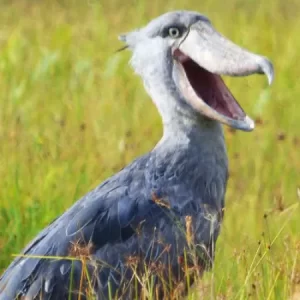
  • One of the world’s most reliable locations for the Shoebill Stork

Unlike many destinations that specialize in either birds or wildlife, Uganda allows visitors to enjoy both. A single itinerary can include gorilla trekking, chimpanzee tracking, Big Five game viewing, boat cruises, and world-class bird watching.
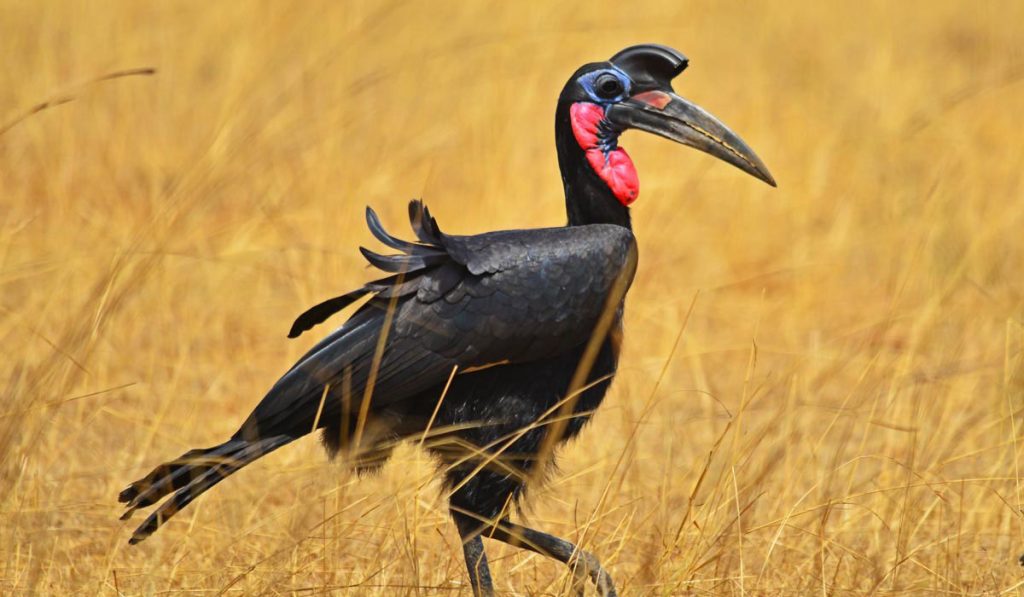
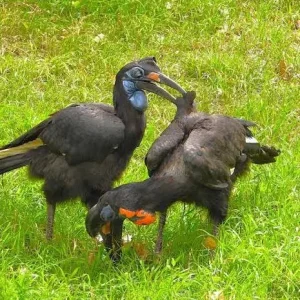
Bird Watching in Uganda - Hornbill
Bird Watching in Uganda – Hornbill


What Makes Bird Watching in Uganda So Special?

Few countries offer such remarkable birding opportunities in such compact distances.

Uganda sits where the East African savannah meets Central African rainforest, while also incorporating the Albertine Rift mountain range and extensive wetland systems. These contrasting ecosystems create ideal conditions for thousands of resident and migratory birds.

Birders can explore:

  • Tropical rainforests
  • Papyrus wetlands
  • Mountain forests
  • Savannah grasslands
  • Lakes and rivers
  • Swamps
  • Woodlands
  • Highland forests

Every habitat introduces an entirely different collection of bird species, making every day of your safari unique.


Uganda’s Most Famous Birds

One of the biggest reasons bird enthusiasts visit Uganda is the opportunity to observe some of Africa’s most iconic and sought-after species.

Some highlights include:

  • Shoebill Stork
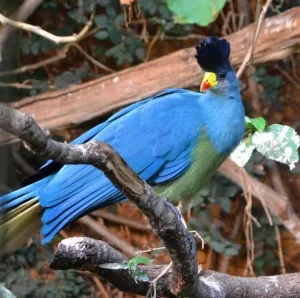
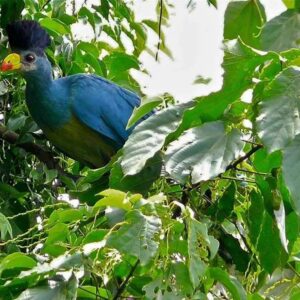
  • Great Blue Turaco
  • Rwenzori Turaco
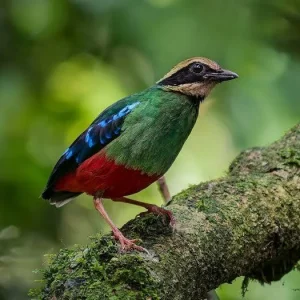
  • Green-breasted Pitta
  • Grauer’s Broadbill
  • Regal Sunbird
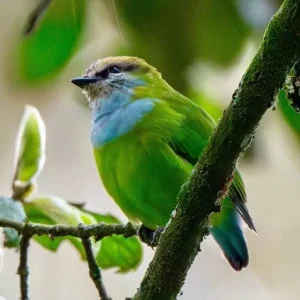
  • African Green Broadbill
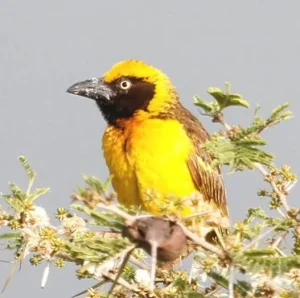
  • Fox’s Weaver
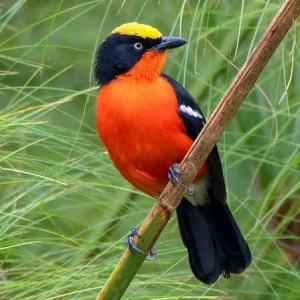
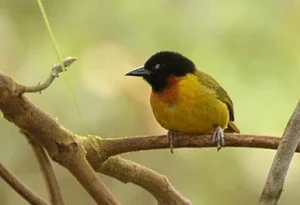
  • Papyrus Gonolek
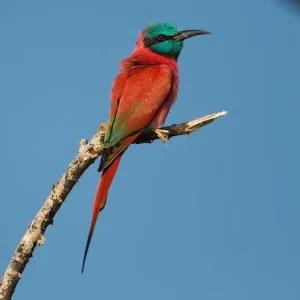
  • Northern Carmine Bee-eater
  • Abyssinian Ground Hornbill
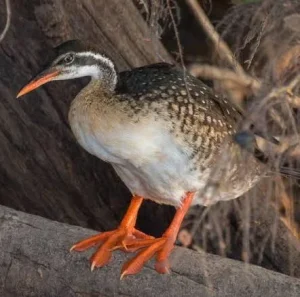
  • African Finfoot
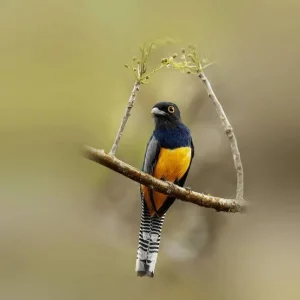
  • Bar-tailed Trogon
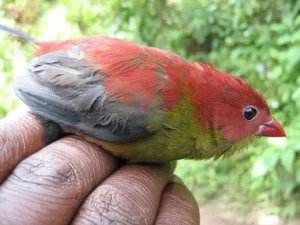
  • Shelley’s Crimsonwing
  • White-bellied Robin-Chat
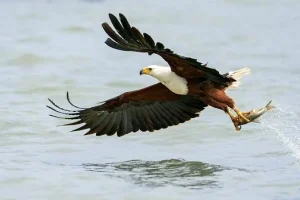
  • African Fish Eagle

Whether you’re building your life list or simply enjoying colorful wildlife, Uganda consistently delivers exceptional sightings.


Albertine Rift Endemic Birds

Uganda is internationally famous among serious birders because it protects many of the world’s rarest Albertine Rift Endemic species.

These birds occur only within the Albertine Rift mountain forests shared by Uganda, Rwanda, Burundi, and the Democratic Republic of Congo.

Among the most desirable sightings are:

  • Rwenzori Turaco
  • Grauer’s Broadbill
  • Regal Sunbird
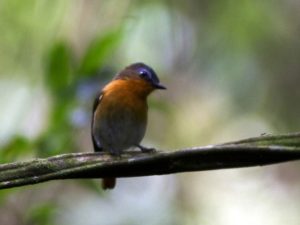
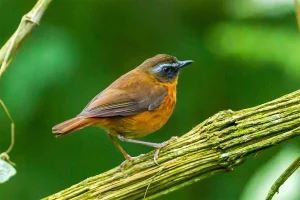
  • Red-throated Alethe
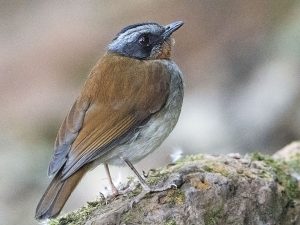
  • Archer’s Robin-Chat
  • Strange Weaver
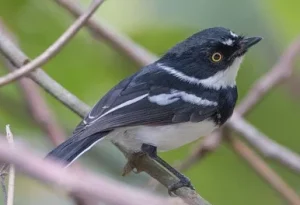
  • Rwenzori Batis
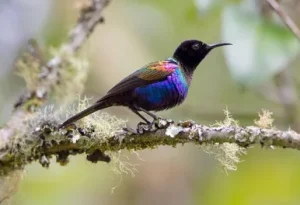
  • Purple-breasted Sunbird
  • Shelley’s Crimsonwing

Bwindi Impenetrable National Park and Mgahinga Gorilla National Park remain the best locations for observing these remarkable species.
Uganda’s Most Famous & Albertine Rift Endemic Birds

Shoebill
Shoebill Stork
Bigodi Wetland Sanctuary
Great Blue Turaco
Rwenzori Turaco
Green-breasted Pitta
Grauer’s Broadbill
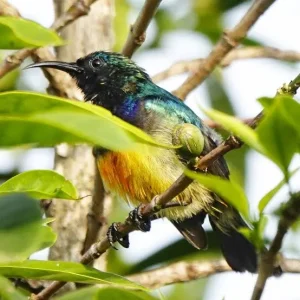
Regal Sunbird
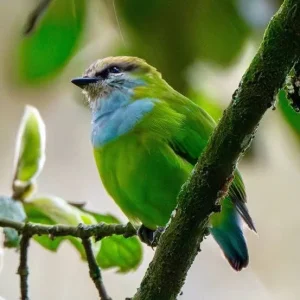
African Green Broadbill
Fox’s Weaver
Papyrus Gonolek
Northern Carmine Bee-eater
Abyssinian Ground Hornbill
African Finfoot
Bar-tailed Trogon
Shelley’s Crimsonwing
White-bellied Robin-Chat
African Fish Eagle
Purple-breasted Sunbird
Red-throated Alethe
Archer’s Robin-Chat
Strange Weaver
Rwenzori Batis

Best Places for Bird Watching in Uganda

Bwindi Impenetrable National Park

Bwindi is famous worldwide for mountain gorillas, but it is equally celebrated among birders.

The park supports over 350 bird species, including more than twenty Albertine Rift endemics. Forest walks reveal colorful turacos, robins, broadbills, barbets, sunbirds, and many species found nowhere else.

Birding here is often combined with gorilla trekking for one of Africa’s most unforgettable wildlife experiences.


Mabamba Swamp

Located just outside Entebbe, Mabamba Swamp is Uganda’s most reliable location for the iconic Shoebill.

Traditional canoe excursions quietly navigate papyrus channels where birders regularly encounter:

  • Shoebill
  • Papyrus Gonolek
  • Blue Swallow
  • Malachite Kingfisher
  • African Jacana
  • African Marsh Harrier

This makes Mabamba an ideal introduction to bird watching in Uganda immediately after arrival.


Queen Elizabeth National Park

Queen Elizabeth National Park is one of Uganda’s most diverse birding destinations, with more than 600 recorded bird species.

The varied habitats include savannah, wetlands, crater lakes, forests, and the famous Kazinga Channel.

Highlights include:

  • African Skimmer
  • Pink-backed Pelican
  • Martial Eagle
  • Saddle-billed Stork
  • Grey Crowned Crane
  • African Fish Eagle
  • Bee-eaters
  • Kingfishers

Boat cruises on the Kazinga Channel offer exceptional close-up bird photography opportunities.


Murchison Falls National Park

Uganda’s largest national park hosts more than 450 bird species.

A boat safari along the Victoria Nile provides excellent chances to observe:

  • Shoebill
  • Goliath Heron
  • African Skimmer
  • Giant Kingfisher
  • Rock Pratincole
  • African Fish Eagle

The surrounding savannah also supports hornbills, bustards, raptors, and numerous weaver species.


Kibale Forest National Park

Best known for chimpanzees, Kibale also attracts birders seeking the elusive Green-breasted Pitta.

Over 375 bird species inhabit this rainforest, including:

  • Green-breasted Pitta
  • Black Bee-eater
  • Yellow-spotted Barbet
  • Blue-breasted Kingfisher
  • White-naped Pigeon

Birding and chimpanzee tracking make an excellent combination.


Lake Mburo National Park

Lake Mburo is ideal for birders interested in acacia woodland species.

The park hosts over 350 bird species, including:

  • African Finfoot
  • Papyrus Yellow Warbler
  • Brown-chested Lapwing
  • Red-faced Barbet

Walking safaris and boat cruises provide unique birding experiences unavailable in most African parks.


Can You Combine Bird Watching with Gorilla Trekking?

Absolutely.

Uganda is one of the few countries where visitors can combine world-class bird watching with gorilla trekking, chimpanzee tracking, game drives, boat safaris, and cultural experiences.

Many of our itineraries include:

This combination creates one of Africa’s most rewarding wildlife holidays.


Best Time for Bird Watching in Uganda

Bird watching is excellent throughout the year.

June to August

Dry conditions make forest trails easier, while wildlife viewing is excellent.

December to February

Ideal weather for birding and photography with comfortable temperatures.

March to May

Breeding season begins, and birds display their brightest breeding plumage.

November to April

Many migratory birds from Europe and Asia are present, increasing species diversity.


What Should You Pack?

Essential birding equipment includes:

  • Quality binoculars
  • A camera with a telephoto lens
  • Lightweight hiking boots
  • Neutral-colored clothing
  • Rain jacket
  • Hat
  • Field guide
  • Notebook
  • Insect repellent
  • Reusable water bottle


Contact Us

Frequently Asked Questions

What are some top places for birding in East Africa?

Rich as it is in wildlife, landscapes, and cultures, East Africa is extremely rich with bird life. There are more than 1400 different species of birds that you can find in Uganda, Rwanda, Kenya, and Tanzania.

Uganda has the most birds of any African country, with a total of more than 1000 species.

From savannas, forests, and wetlands avid birders know that East Africa is the place to visit for unparalleled experiences. Here are 10 places worth visiting for birding in Uganda, Rwanda, Kenya, and Tanzania.

Why is Uganda the best country for birding in Africa?

Uganda is regarded as the best country for birding in Africa because the small country is home to more than 1000 different bird species – around 50% of all African birds. Uganda’s geography is made up of many lakes, rivers, swamps, forests, mountains and expansive savannahs.

In these various ecosystems, you can find birds both common and rare, including some that won’t be found anywhere else in the world. Whether you are on safari or moving through Uganda’s town, the variety of birds around you is unlike anywhere else.

Beyond the nature, Uganda has a well developed tourism infrastructure that makes visiting any part of the country easy and customizable to the visitor’s choices.

What are some interesting birds to look out for on a birding safari?

With a birding list of more than 1400, the interests of many people will be different. Whether you want the popular ones or want to narrow down on a specific area or ecosystem, your choices are quite endless.

Here are some of the birds we think you will find interesting and will inspire you to plan for your birding adventure in Eastern Africa. They are not shown in any order but you can do further searching to see their pictures and learn about them.

 Shoebill  Flamingo  African Fish Eagle
 Grey Crested Crane  Marabou Stork  African Spoonbill
 Hamerkop  Sacred Ibis  Pelicans
 Ostriches  Great Blue Turaco  Secretary Bird
 Martial Eagle  Saddle-billed Stork  Great Cormorant
 Kori Bustard  Kingfishers  Vultures
 Long-tailed Widow Bird  Hornbills  Montane Nightjar


Will I definitely see the shorbill stork?

Given that shoebills live freely in their wetland habitat, we can’t give a 100% guarantee that you will see the shoebill. And no one can – unless they are lying.

With that in mind, we can assure you of a more than 90% likeliness of seeing the shoebill. For birding, these are good odds. Uganda is the best place in the whole world where you can see the shoebill stork, with high-level guarantees, especially in the Mabamba Wetland of Lake Victoria.

Furthermore, the shoebill can also be seen easily in Lake Mburo, Semuliki, and Murchison Falls National Parks, as well as the Ziwa Rhino Sanctuary.

If your sole interest is in seeing the shoebill, take a look at our 1 Day Mabamba Swamp Shoebill Birding Tour which can be done independently or as an addition to a longer safari in Uganda.

When is the best season for birding safaris?

The climate in Uganda, Rwanda, Kenya and Tanzania is generally tropical with 2 main seasons distinguished by the rain or sunshine. In the Savannah, the seasons are very distinct but this is not the case in forested, mountainous and swampy ecosystems.

Birds love water and you can find them throughout the year, but the best period is during the rainy season. While the actual rain will make most of the small birds hide, the general overcast sky provides opportunities to do bird watching for longer periods before they see shelter from the sun.

The heavy rains of April might be a bit more challenging but all the other rainy season months are ideal for birding. The additional advantage is that the parks have no crowds, making it perfect for birding.

This point of seasons doesn’t matter much for swamp, mountain, and rainforest ecosystems because their microclimates make it possible for rain at any time of the day, regardless of season. Which means that they are quite perfect all year through.

What's the best time of day for bird watching?

The best time of day for birding in during the morning hours. This is when birds are most active as they feed and try to catch the early morning sun (and worm).

As the sun rises higher, the birds will be easier to find near water sources where it is still relatively cool.

Depending on which environment your are birding in, some birds might be easier to see and photography than others as the day goes on. This is because the early morning calls help you know where to look and what to look for.

How long should a birding safari be?

A birding safari can be a long or as short as you like. It depends on what you are interested in, your schedule, your budget among many other factors that affect your travel.

A short 1 day birding tour can be done on its own or as part of a bigger trip. For example, a longer safari focusing on wildlife, gorillas, or mountain climbing can have a dedicated day or half day for some birding. This works especially for a group where most people are not necessarily avid birders.

Longer birding safaris are more dedicated to bird watching and planned to follow the pace that is right for birding.

This flexibility makes possible for you to enjoy a birding safari – short or long, and check some of birds off your list.

What should you pack for a birding safari?

What you pack for any safari should always depend on which places you will visit and what activities you are partaking in. Similarly, what you pack for your birding safari will be determine by the details of the entire trip.

The following are general packing list items you should think about, and finalize with your itinerary and safari planner.

  • A camera with back up battery and cards, and long lenses
  • Comfortable clothing and walking shoes 
  • Binoculars
  • Wide-brimmed hat to protect from the sun
  • Sunscreen to protect you from the scotching sun
  • Your regular medication as advised by the doctor
  • A light jacket/poncho incase it rains

Is Uganda good for beginner birders?

Yes. Uganda offers excellent birding for beginners while remaining one of Africa’s top destinations for experienced birders.

Will I definitely see a Shoebill?

Although wildlife can never be guaranteed, Mabamba Swamp offers one of Africa’s highest chances of seeing a Shoebill.

How many days do I need?

A dedicated birding safari typically lasts between 7 and 14 days, depending on your target species.

What is Uganda's rarest bird?

Several Albertine Rift endemic birds are considered among Africa’s rarest, including Grauer’s Broadbill and Shelley’s Crimsonwing.

Do I need an expert guide?

Professional bird guides greatly improve your chances of finding rare species and identifying calls that visitors might otherwise miss.

Bird Watching Safaris with Primate World Safaris

Our Uganda bird watching safaris are designed for everyone, from first-time birders to experienced ornithologists seeking Africa’s rarest species.

Every safari can be customized to match your interests, budget, preferred bird species, and travel schedule.

Whether your dream is seeing the iconic Shoebill, discovering Albertine Rift endemics, photographing colorful bee-eaters, or combining bird watching with gorilla trekking, our experienced guides will help you experience the very best of bird watching in Uganda.

Ready to start planning your Uganda birding adventure? Contact Primate World Safaris today and let us create a tailor-made bird watching safari you’ll never forget.

Contact Us

error: Our content is protected, Do not copy!!