
Tipping On Your Uganda Safari
Planning a safari to the Pearl of Africa involves more than just booking lodges and tracking permits. As you prepare for your journey, you will realize that tip money is not part of your all-inclusive package. This comprehensive guide helps you navigate the nuances of tipping in Uganda and neighboring East African destinations.
While tipping is never compulsory, it plays a vital role in the local tourism economy. Use these insights to extend your gratitude to the people who make your adventure unforgettable.
Understanding the Tipping Culture in Uganda
In many Western countries, tipping is a rigid expectation. In Uganda, the culture is different. Tipping after a service is not a traditional custom for locals. Because of this, staff members will rarely remind you or hint at a gratuity. As a guest, you have full discretion.
Why Should You Tip?
If it isn’t expected, why do we encourage it? The answer lies in the impact of your generosity. While safari lodges and tour operators pay their staff salaries, these wages are often modest. Tips provide an essential top-up that helps staff members pay for school fees, healthcare, and home improvements.
When you tip for good service, you do more than say thank you. You directly support the families of the rangers, trackers, and cleaners who work tirelessly behind the scenes.
The Power of Local Currency
While many high-end lodges quote prices in US Dollars, the people serving you live in a Ugandan Shilling (UGX) economy. If you tip in small USD bills (like $1 or $5), the recipient must find a forex bureau to change them. Many banks in Uganda do not accept torn, dirty, or old (pre-2013) US bills.
By tipping in Ugandan Shillings, you ensure your gratitude is immediately useful. We recommend visiting an ATM or forex bureau upon arrival at Entebbe International Airport to secure a stack of 5,000, 10,000, and 20,000 UGX notes.
Tipping for Primate Trekking
Trekking to see Mountain Gorillas or Chimpanzees is the highlight of most Ugandan safaris. This experience involves a massive team of dedicated professionals.
The Lead Guides and Trackers
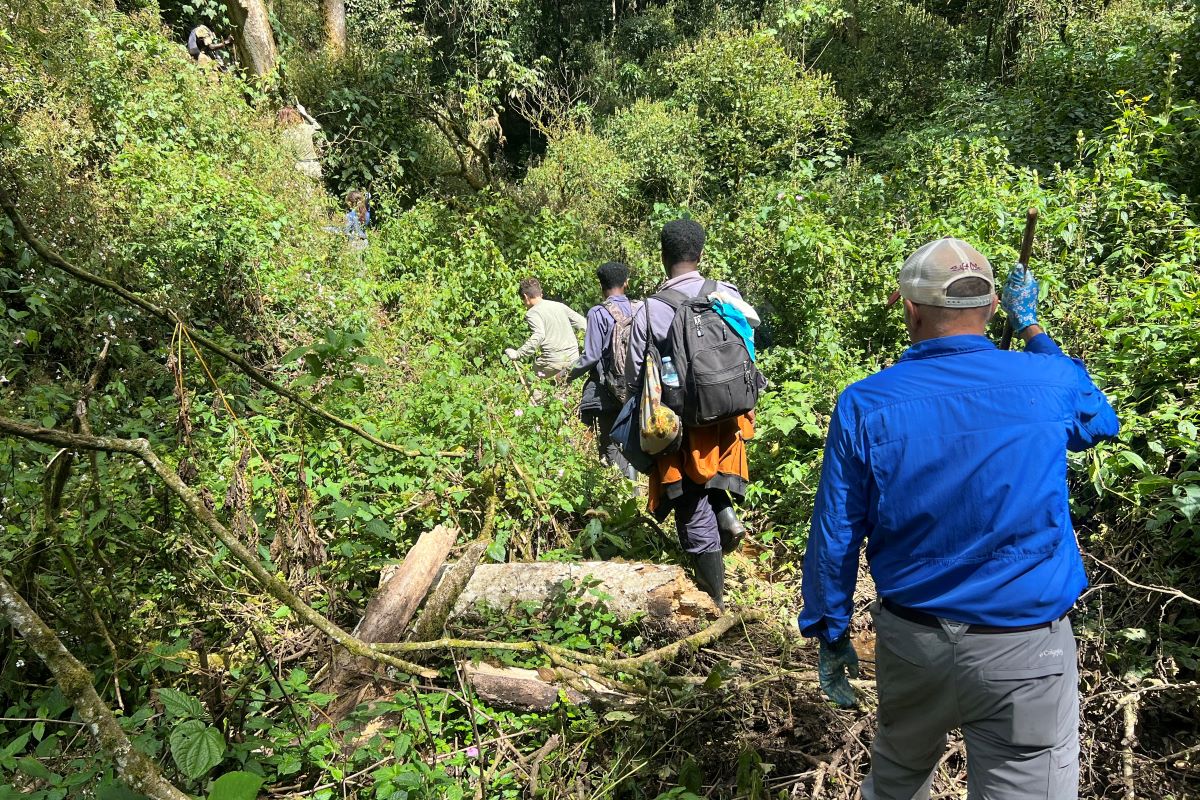
When you head into Bwindi Impenetrable Forest or Kibale National Park, you are accompanied by a lead guide and several armed park rangers. However, trackers also play a role. These individuals head into the forest hours before you wake up to locate the primate families.
- Guideline: We suggest $15 USD (approx. 55,000 UGX) per guest for the trekking team.
- The Process: Most parks have a central tip box at the briefing center. Alternatively, you can give the total amount to the head guide at the end of the trek. They will ensure the trackers and guards receive their fair share.
The Role of the Porter
We strongly recommend hiring a porter for your gorilla trek, even if you are fit. Porters are locals from the surrounding communities. By hiring one, you provide a direct income to a family that might otherwise rely on forest resources.
- The Fee: The standard hiring fee is $20 USD (paid directly to the porter).
- The Tip: Depending on the difficulty of the terrain and the porter’s helpfulness, a tip of $5 to $20 USD per guest is appropriate. If the porter literally pulls you up a muddy slope, a higher tip is a wonderful way to show appreciation.
Your Safari Driver-Guide
Your driver-guide is your most constant companion. They are your navigator, wildlife spotter, mechanic, and cultural translator. They often work 15-hour days to ensure your safety and comfort.
- Guideline: $5 to $10 USD per guest, per day.
- Solo Travelers: If you are a solo traveler or a couple, you might choose to tip at the higher end of the scale ($15-$20 per day total) since the workload for the guide remains the same regardless of the group size.
- Timing: It is customary to present this tip on your final day, usually during the drop-off at the airport or your final hotel. A handwritten thank-you note alongside the cash makes the gesture even more meaningful.
Lodge and Camp Staff
Behind every clean room and hot meal is a team of housekeepers, chefs, and maintenance workers. Many of these staff members remain invisible to the guests.
The General Tip Box
To ensure fairness, most small safari lodges use a Communal Tip Box, usually located at the reception or in the dining area. Tips placed here are divided among all staff, including the kitchen crew and laundry team who you may never meet.
- Guideline: $3 to $5 USD per guest, per night.
- Individual Tips: If a particular waiter or housekeeper goes above and beyond (e.g., decorating your room for an anniversary), feel free to give them an individual tip in person.
Large Hotels in Entebbe or Kampala
In larger city hotels, the tip box system is less common. In these establishments, you should tip individuals directly.
- Hotel Porters: 1,000 to 5,000 UGX per bag.
- Waiters/Bar Staff: 10% of the bill or a flat amount of 5,000 to 10,000 UGX for a standard meal.
National Park Rangers and Specialized Guides
During your safari, you may engage in specific activities like boat safaris on the Kazinga Channel, swamp walks in Mabamba, or night game drives.
- Site Guides: These specialists often have incredible knowledge of birds and botany. A tip of $3 to $5 USD (approx. 10,000 – 20,000 UGX) per guest is standard for a 2-3 hour activity.
- Community Guides: If you take a village walk or visit a Batwa community, the fees often go to a community fund. However, a small direct tip to the individual guide is always welcome.
Practical Tips for Managing Your Cash
Managing money in the bush requires a bit of foresight. Here is how to stay organized:
- Use Envelopes: Bring a pack of small envelopes from home. At the end of each leg of your trip, place the tip inside and write a small note. This keeps the money secure and adds a personal touch.
- Break Large Bills Early: It is very difficult to get change for a 50,000 UGX note in a small village. Whenever you pay for a meal or a drink, ask for smaller denominations (5,000s and 10,000s) to keep your tipping stash ready.
- Check Your USD Dates: If you choose to tip in USD, ensure the bills are printed after 2013. Older bills are often rejected by Ugandan banks or exchanged at a much lower rate, which devalues your gift.
- The No-Tip Scenario: If you receive poor service, do not feel obligated to tip. Tipping is a reward for effort and care. If a staff member is rude or negligent, a tip is not required.
Beyond the Money
In Uganda, the way you give a tip is just as important as the amount.
- The Two-Handed Receive: You may notice Ugandans giving or receiving items with both hands or with the right hand while the left hand touches the right forearm. This is a sign of deep respect. Using two hands to hand over a tip is a beautiful way to honor local customs.
- Discretion: While tipping is appreciated, it is best done quietly. Avoid making a show of the money. A quiet thank you or Webale nnyo (Thank you very much in Luganda) goes a long way.
- The Value of Connection: Many staff members value a conversation or a shared photo just as much as a tip. Showing genuine interest in their lives and culture makes the professional relationship feel more like a friendship.
Tipping in Neighboring Destinations
If your safari extends into Rwanda, Kenya, or Tanzania, the rules are largely similar, though the currencies change.
- Rwanda: Tipping is slightly more expected in high-end Kigali restaurants than in Kampala. Use Rwandan Francs (RWF) for small tips.
- Kenya/Tanzania: These countries have a more established safari circuit where tipping is more standardized. The rates are similar to Uganda, but often quoted more strictly in USD.
Frequently Asked Questions (FAQ)
Should I tip the owner of the safari company?
No. It is generally not expected to tip the owners or directors of the tour company. Your tips should be directed toward the staff who are on the front lines of service.
Is it okay to give gifts instead of money?
While items like school supplies, clothing, or electronics are appreciated, they should be in addition to a cash tip, not a replacement. Cash allows the recipient to prioritize their own needs, whether that is food, fuel, or savings.
What if I am traveling on a tight budget?
Please do not let these guidelines stress you. If your budget is tight, focus your tipping on the people who provided the most personal service your driver-guide and your trekking porters. At lodges, a smaller contribution to the general tip box is perfectly acceptable.
Summary of Tipping Rates
Service Provider | Recommended Amount (USD) | Recommended Amount (UGX) |
Safari Driver-Guide | $10 per guest/day | 37,000 UGX |
Gorilla Trekking Team | $15 per guest | 55,000 UGX |
Trekking Porter | $5 – $10 (Tip only) | 20,000 – 40,000 UGX |
General Lodge Staff | $3 – $5 per guest/night | 12,000 – 18,000 UGX |
Restaurant Waiter | 10% of bill | Variable |
Airport Transfer Driver | $2 – $5 | 7,000 – 18,000 UGX |
A Heart of Gratitude
Uganda is known for having some of the most hospitable people in the world. Often, the smiles and care you receive are genuine expressions of Karibu (welcome). By following these guidelines, you ensure that your visit leaves a positive, lasting footprint on the local communities.
Remember: Give according to your heart and your means. There are no wrong amounts when a gift is given with sincerity. Your generosity helps sustain the incredible conservation efforts and tourism infrastructure that keep Uganda’s wilderness thriving.