
The Ultimate Budget Travel Guide to Uganda
Uganda is famous worldwide for its luxury eco-lodges and bucket-list primate safaris, but it is also one of the most accessible and rewarding destinations in East Africa for backpackers and budget-conscious travelers.
By stepping away from high-end, pre-packaged itineraries and embracing local transit, vibrant street food cultures, and community-led outdoor adventures, you can comfortably explore Uganda for as little as $30 to $50 per day.
This comprehensive tactical guide breaks down exactly how to stretch your money without missing out on the raw magic of the Pearl of Africa.
1. Transportation & Getting Around on a Dime
Navigating Uganda using local transportation is not only incredibly cheap, but it also offers an authentic window into daily life.
[ Long Distance] ──> Matatus (Shared Minibuses) or Regional Coach Buses
[ Urban Transit] ──> Boda-Bodas (Motorcycle Taxis) mapped via SafeBoda / Bolt
Matatus (Shared Minibuses)
Matatus are the absolute backbone of public transit in Uganda. These white-and-blue striped minibuses run fixed routes between virtually every major town and city. They do not operate on strict time schedules; instead, they depart from designated taxi parks the moment they are completely full.
- The Cost: A long-distance journey crossing from the capital city of Kampala to the western tourism hub of Fort Portal costs roughly 70,000 to 80,000 UGX (approximately $18 to $21 USD).
Boda-Bodas (Motorcycle Taxis)
Furthermore, to beat the heavy traffic in major urban centers like Kampala and Entebbe, locals rely on boda-bodas. They are fast, highly agile, and easily found on nearly every street corner.
In terms of expense, short-distance neighborhood trips typically cost between 2,000 and 10,000 UGX ($0.50 to $2.60 USD). However, never jump on a random boda-boda without agreeing on the fare first, as tourist markups are common. To avoid haggling entirely, download ride-sharing apps like SafeBoda or Bolt. These apps lock in transparent, metered pricing, trace your route via GPS, and ensure your driver carries a spare safety helmet.
2. Low-Cost Activities & Stunning Natural Wonders
In addition to affordable transport, you do not need to pay hefty national park entry fees to experience Uganda’s dramatic geographical diversity. Several of the country’s most beautiful landscapes are entirely free or cost a nominal community fee to enter.
Comparative Framework for Low-Cost Ugandan Destinations
Destination | Location Zone | Primary Activities | Average Estimated Cost (USD) |
Lake Bunyonyi | Southwestern Highlands | Bilharzia-free swimming, dugout canoeing, and island hiking | $5 – $15 per day |
Sipi Falls | Eastern Uganda (Kapchorwa) | Tri-waterfall trekking, local coffee tours, and rock climbing | $10 – $20 for a local guide |
Entebbe Botanical Gardens | Entebbe (Lake Victoria) | Birdwatching, cycling, canopy walks, monkey spotting | $3 – $5 entry fee |
Kampala Cultural Markets | Central Kampala | Walking tours, craft shopping, and historic architecture | Free (pay-what-you-want for guides) |
Lake Bunyonyi: The Paradise of the Southwest
Nestled near the gorilla forests, this striking crater lake is dotted with 29 islands and framed by terraced hillsides. Because the water is entirely free of bilharzia parasites, hippos, and crocodiles, it is a safe haven for wild swimming. You can rent a traditional wooden dugout canoe for a few dollars or hike the surrounding ridges for panoramic views without spending a dime.
Sipi Falls: The Edge of Mount Elgon
Located in eastern Uganda, Sipi consists of a spectacular series of three consecutive waterfalls plunging over volcanic cliffs. Hiring an independent, local community guide to lead you along the muddy trails through local shambas (farms) costs a fraction of a standard park permit, and the money goes directly into the pockets of the village host.
3. Budget-Friendly Safari Alternatives
The standard $800 price tag for a single mountain gorilla trekking permit can easily break a backpacker’s budget. Fortunately, you can still experience incredible, raw African wildlife encounters by choosing affordable alternatives.
Shared, Small-Group Safaris in Queen Elizabeth National Park
Instead of booking an all-inclusive luxury safari package from overseas, travel independently to towns bordering the parks, like Kasese or Katunguru. Local budget operators and community campsites frequently coordinate shared, small-group game drives. Splitting the vehicle and fuel costs with fellow travelers keeps the experience highly affordable.
The Kazinga Channel Boat Cruise
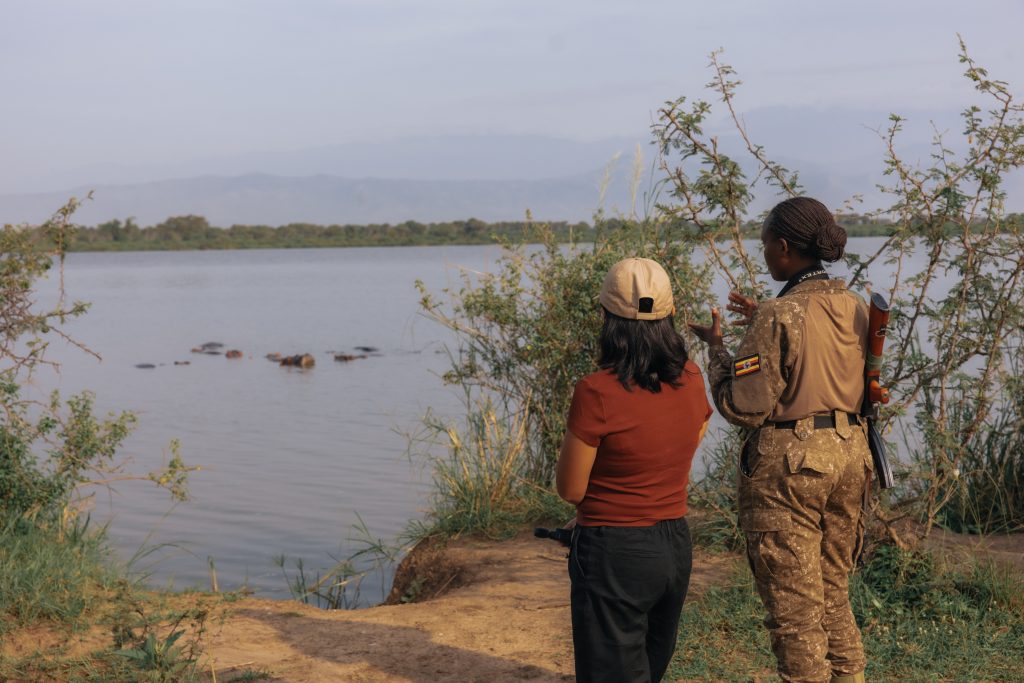
While inside Queen Elizabeth National Park, skip the expensive private boat hire and book a seat on the public UWA launch cruise along the Kazinga Channel. This two-hour water safari brings you extraordinarily close to hundreds of wallowing hippos, massive Nile crocodiles, bathing elephants, and Cape buffaloes cooling off at the water’s edge.
The $15 Quick Safari: If you are short on time or money, visit the Uganda Wildlife Conservation Education Centre (Entebbe Zoo). Located just 15 minutes from Entebbe International Airport, this expansive sanctuary houses rescued Ugandan wildlife, including lions, rhinos, giraffes, and chimpanzees, in large, naturalistic exhibits for a tiny entry fee.
4. Cheap Eats: Fueling Up on Street Food
Food is one of the easiest areas to save money in Uganda, thanks to a robust, delicious, and incredibly cheap street food culture centered around open-air markets.
- The Iconic Rolex: Uganda’s undisputed culinary king. A Rolex consists of a fresh, hot wheat chapati rolled up with a multi-egg omelet, sliced tomatoes, shredded cabbage, and red onions. Cooked right in front of you on roadside grills, a standard Rolex is highly filling and costs an astonishingly low 2,000 to 4,000 UGX ($0.50 to $1.10 USD).
- Kikomando: A hearty, protein-packed budget staple favored by students and budget travelers. It features a base of chopped, flaky chapati smothered in a rich, seasoned stew of yellow beans. A massive bowl costs less than $1 USD.
- Tropical Fruit Markets: Head to any local roadside market to stock up on fresh produce. Massive avocados, sweet finger bananas, pineapples, and fresh mangoes can be bought for pennies when purchasing directly from local vendors.
5. Comfortable, Budget-Friendly Accommodations
Uganda features an excellent, welcoming network of budget-focused lodging tailored specifically for backpackers, digital nomads, and campers.
Backpacker Hostels & Campsites
Major travel hubs like Jinja, Lake Bunyonyi, Fort Portal, and the fringes of Bwindi are highly backpacker-friendly. If you are willing to pack a lightweight travel tent, almost all budget lodges allow you to pitch it on their green lawns for roughly 20,000 to 30,000 UGX ($5 to $8 USD) per night, giving you full access to hot showers, shared kitchens, and common areas. Dorm beds in clean, social hostels generally average around 60,000 UGX ($16 USD) a night.
Family-Owned Guest Houses & Homestays
Additionally, look for locally owned guest houses or bed-and-breakfasts (frequently listed locally as lodges). These properties offer simple, clean, self-contained rooms at a fraction of the cost of tourist hotels. Staying here directly supports the local economy and connects you with family hosts who can provide invaluable, insider tips on local transit routes and cheap places to eat.
Ready to Map Out Your Budget Adventure?
Uganda proves that you do not need a massive bank account to experience world-class landscapes, iconic African wildlife, and genuine cultural hospitality. By traveling like a local, you keep your expenses low while opening the door to spontaneous, meaningful interactions that luxury tourists completely miss.