
How Mountain Gorilla Families Are Named (and Why Every Family Has a Unique Story)
One of the questions we often hear from travelers planning their first gorilla trekking safari is:
“Why do mountain gorilla families have names like Mubare, Rushegura, Christmas, or Susa?”
It’s a great question, and one that reveals just how personal and fascinating gorilla conservation has become in Uganda and Rwanda.
Unlike animals in a zoo, mountain gorillas live completely wild lives in dense forests. Every habituated gorilla family has a unique history, distinct personalities, leadership dynamics, and even remarkable stories of survival. Their names are not chosen randomly; they reflect places, events, behaviors, cultural heritage, or unforgettable moments observed by researchers and park rangers over many years.
Understanding these stories makes your gorilla trekking experience far more meaningful. Instead of simply meeting “a group of gorillas,” you’ll appreciate that you’re visiting a family with its own history and role in one of the world’s greatest conservation success stories.
What Is a Mountain Gorilla Family?
Mountain gorillas live in close-knit social groups known as families or troops. Each family is led by a dominant adult male called a silverback, whose responsibilities include protecting the group, resolving conflicts, guiding daily movements, and caring for younger members.
A typical gorilla family may include:
- One dominant silverback
- One or more subordinate silverbacks
- Adult females
- Blackbacks (young males)
- Juveniles
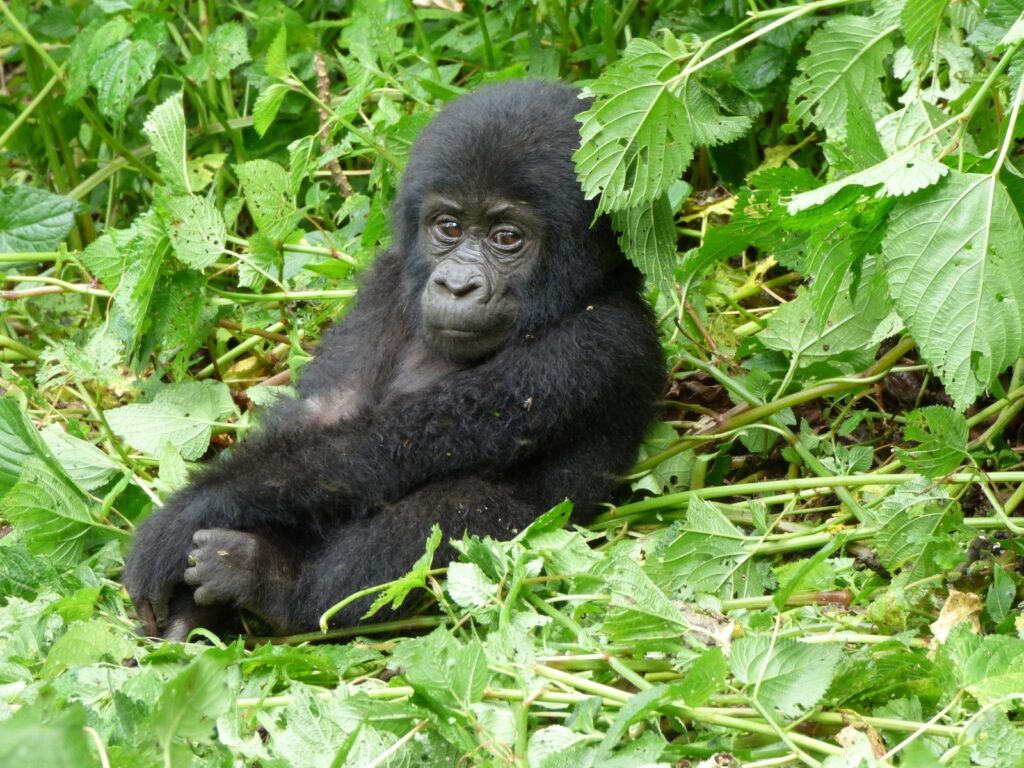
- Playful infants
Depending on births, migrations, and natural changes, family sizes may range from fewer than ten individuals to more than thirty.
Each family develops its own social structure, routines, and personality over time.

Who Names Gorilla Families?
Contrary to what many visitors assume, tour companies do not name gorilla families.
The names are generally adopted by researchers, trackers, and wildlife authorities after a family has been identified and monitored over time.
Organizations involved include:
- Uganda Wildlife Authority (UWA)
- Rwanda Development Board (RDB)
- Conservation researchers
- Gorilla monitoring teams
- Veterinary teams
- Long-serving park rangers
Because these professionals observe gorillas daily, they often witness events that naturally inspire memorable names.
Where Do Gorilla Family Names Come From?
There is no single naming formula. Instead, names usually originate from one of several sources.
1. The Place Where the Family Was First Found
Many gorilla families are named after the location where researchers first documented or habituated them.
For example, the famous Mubare Gorilla Family in Bwindi Impenetrable National Park takes its name from the nearby Mubare Hills.
This naming tradition helps conservation teams easily identify territories while preserving the historical connection between the gorillas and their habitat.
2. The Name of the Dominant Silverback
Sometimes a family becomes known by the name of its leading male, often referred to as the silverback.
As leadership changes over time, some groups continue carrying the original family name because it has become part of conservation records and tourism history.
This continuity allows researchers to maintain long-term monitoring data spanning decades.
3. Remarkable Events
Certain families are named after memorable moments that occurred during their discovery or habituation.
A well-known example is the Christmas Gorilla Family in Uganda, named after the dominant silverback, Christmas, who himself was born on Christmas Day.
Stories like these help visitors connect emotionally with individual gorillas rather than viewing them simply as wildlife.
4. Local Languages and Cultural Heritage
Many gorilla family names come from local languages spoken by communities living near the parks.
These names often describe:
- Landscapes
- Rivers
- Hills
- Traditional meanings
- Cultural references
Using local names recognizes the communities that have shared these forests with gorillas for generations.
Why Gorilla Family Names Matter
Giving names to habituated gorilla families is much more than a tourism tradition.
Names help researchers monitor:
- Births
- Deaths
- Family splits
- Migrations
- Disease outbreaks
- Genetic relationships
- Conservation success
Without clear identification, long-term scientific monitoring would be significantly more difficult.
Can Gorilla Families Change?
Absolutely.
Mountain gorilla society is dynamic.
Over the years:
- Young silverbacks may leave to form new families.
- Adult females sometimes transfer between groups.
- Large families occasionally split naturally.
- Dominant silverbacks may be replaced.
When a new family forms, conservation teams may assign a new name that reflects its identity or origin.
These natural changes are signs of healthy population dynamics rather than instability.
Some of the Best-Known Gorilla Families
Although visitors cannot always choose a specific family, because allocations depend on permits, fitness levels, and daily tracking, several gorilla groups have become internationally recognized.
Mubare Family
Bwindi’s first habituated gorilla family is famous for opening the way for gorilla tourism in Uganda.
Rushegura Family
Known for its relatively calm behavior and long history of successful habituation.
Habinyanja Family
One of Bwindi’s larger families is recognized for its complex social interactions.
Nkuringo Family
Often associated with challenging but rewarding trekking experiences in southern Bwindi.
Susa Family
Perhaps Rwanda’s most famous gorilla family was extensively studied by the renowned primatologist Dian Fossey.
Each family offers a completely different trekking experience because every group has unique personalities and behaviors.
Can You Request a Specific Gorilla Family?
Sometimes, but not always.
Park authorities allocate gorilla families based on several important factors, including:
- Visitor fitness
- Age
- Group size
- Daily gorilla movements
- Permit availability
- Conservation considerations
If you have a particular family in mind, discuss it with your tour operator well before your trekking date. While requests cannot be guaranteed, early planning improves your chances.
Every Gorilla Family Has Its Own Personality
One of the most fascinating aspects of gorilla trekking is realizing that gorilla families behave differently.
Some groups are:
- Curious about visitors
- Quiet and relaxed
- Highly playful with infants
- More active throughout the day
- Frequently moving while feeding
Experienced guides often recognize these subtle differences because they spend years following the same gorilla families.
This is one reason no two gorilla treks are ever identical.
A Conservation Success Story
Mountain gorillas were once considered at serious risk of extinction due to habitat loss, poaching, civil unrest, and disease.
Today, thanks to coordinated conservation efforts involving governments, local communities, conservation organizations, researchers, veterinarians, and responsible tourism, mountain gorilla numbers have increased to more than 1,000 individuals, making them one of the few great ape populations whose numbers are growing.
Every gorilla permit purchased contributes directly to:
- Protected area management
- Ranger patrols
- Veterinary care
- Community development
- Habitat protection
- Ongoing scientific research
When you visit a named gorilla family, you become part of this wider conservation story.
Our Experience at Primate World Safaris
Over the years, we’ve welcomed travelers from every corner of the world who often arrive focused on seeing the gorillas.
Yet, after spending an unforgettable hour with a habituated family, they leave talking about individual gorillas, the curious infant that kept tumbling through the undergrowth, the protective mother gently grooming her young, or the imposing silverback quietly watching over the group.
Learning the history behind the family they visited transforms the experience. It changes a wildlife sighting into a genuine connection with one of Africa’s most extraordinary conservation achievements.
That’s why, before every trek we organize, we encourage our guests to learn a little about the gorilla family they may encounter. Understanding their story makes every moment in the forest even more memorable.
Final Thoughts
Mountain gorilla family names are more than labels on a trekking permit. They preserve history, reflect culture, support scientific research, and remind us that every habituated group has its own identity and story.
Whether you meet the legendary Mubare Family in Bwindi or another remarkable group in Uganda or Rwanda, you’re witnessing generations of conservation work that continues to protect one of Earth’s rarest great apes.
The next time you hear a ranger announce the name of your assigned gorilla family, remember that behind that name lies years of observation, remarkable resilience, and a story waiting to be discovered.
If you’re planning a gorilla trekking adventure, our safari specialists at Primate World Safaris can help you secure permits, recommend the best trekking sectors based on your interests and fitness, and design a personalized safari that brings you closer to these incredible primates while supporting responsible tourism and conservation.
Frequently Asked Questions
Why do mountain gorilla families have names?
Names help researchers, rangers, and conservation authorities identify and monitor specific habituated gorilla groups over many years while also reflecting their history, location, or unique characteristics.
Who decides the names of gorilla families?
Names are typically adopted by wildlife authorities, researchers, and experienced tracking teams after observing a gorilla family over time.
Can tourists choose which gorilla family to visit?
Sometimes, but allocations depend on permit availability, trekking conditions, visitor fitness, and conservation management. Requests can occasionally be accommodated, but are never guaranteed.
Do gorilla family names ever change?
Established family names usually remain the same for consistency in conservation records, although newly formed families receive their own names.
Are all mountain gorilla families open to tourists?
No. Only habituated families that are considered comfortable with limited human presence are available for gorilla trekking, while many others remain unhabituated and are protected from tourism.